
What Are the Key Advantages of Using Gr2 Titanium Wire in Advanced Manufacturing?
- Gr2 Titanium Wire
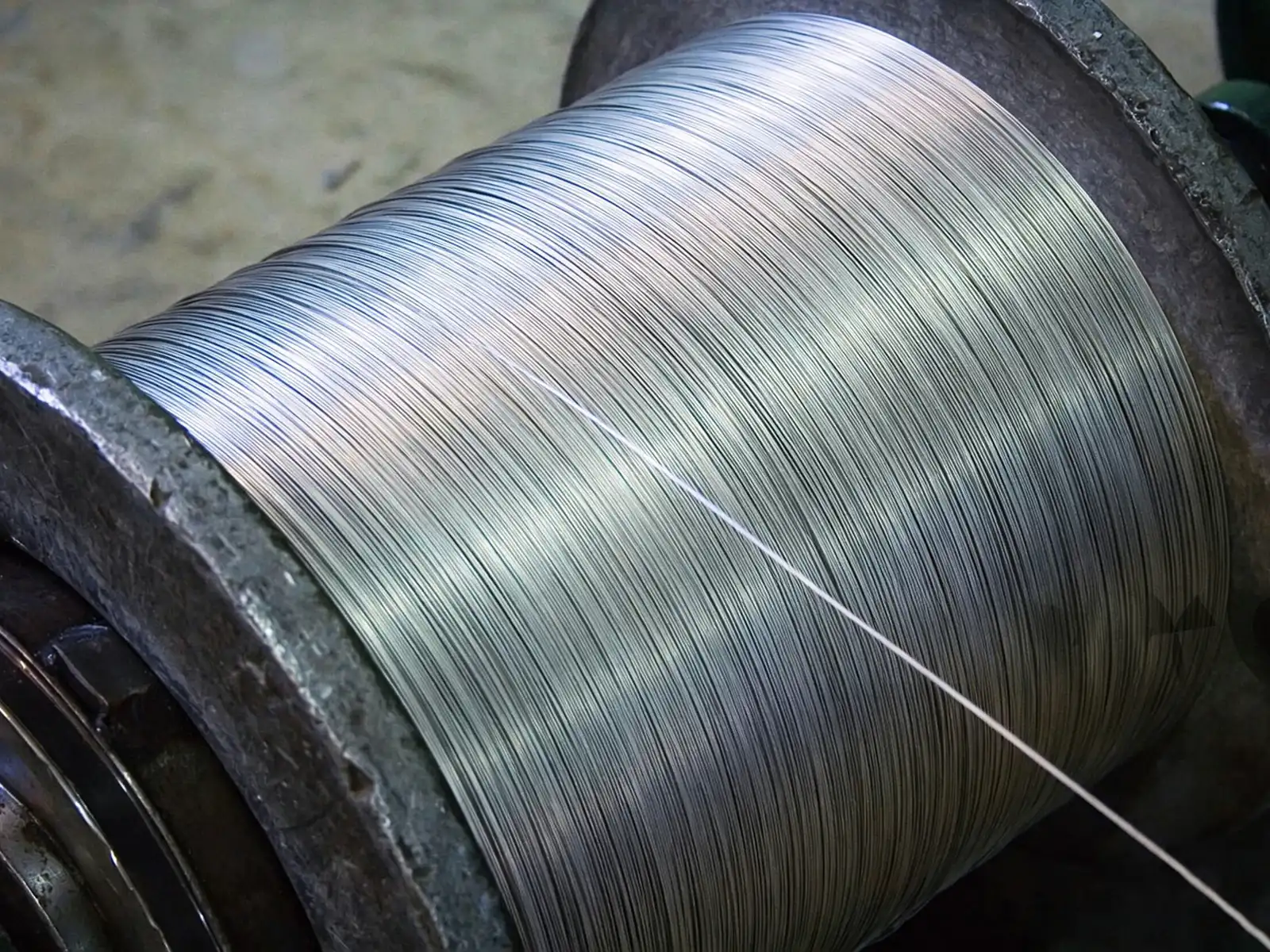
Direct engineering answer. Gr2 Titanium Wire should be evaluated against the finished component, product form, governing specification, downstream process and acceptance evidence. A general property value is an orientation tool; the released drawing, current certificate and inspection plan control the final decision.
In the field of advanced manufacturing, material selection directly affects component performance and service life. Gr2 commercially pure titanium wire (Grade 2 / CP titanium TA2), as defined by ASTM B863 Grade 2, has titanium as the balance, with no separate acceptance criterion of –≥99.2%”; product quality is instead governed jointly by the limits on impurity elements such as Fe, O, C, N, and H and by the mechanical property requirements. Gr2 titanium wire exhibits good corrosion resistance in chlorine-containing, seawater, and various acidic media, while offering moderate strength and good cold formability. It is therefore commonly used in chemical equipment, marine engineering, medical devices, and precision electronics. Compared with conventional austenitic stainless steel, it is generally more suitable in corrosive environments; compared with Gr1 it offers higher strength, and compared with Gr4 it offers better cold-work ductility.
1. Chemical Composition and Mechanical Properties of Gr2 Titanium Wire
(1) Composition Control and Batch-to-Batch Consistency
When Gr2 titanium wire is ordered to standards such as ASTM B863 and GB/T 3620.1, the titanium content is normally defined as the balance. Typical maximum limits for the principal impurity elements are: Fe ≤ 0.30%, O ≤ 0.25%, C ≤ 0.08%, N ≤ 0.03%, and H ≤ 0.015%. Compared with Gr1, Gr2 permits slightly higher Fe and O limits and therefore offers higher strength; compared with Gr4, Gr2 has relatively looser impurity control and better cold-work ductility. This control window helps ensure consistency of properties across batches and suits precision forming and continuous wire-feed welding.
(2) Mechanical Properties and Condition Selection
The table below lists typical room-temperature mechanical properties of annealed, half-hard, and hard-drawn Gr2 titanium wire. The data are provided for material selection reference only and are not the sole basis for acceptance; the yield strength of half-hard and hard-drawn conditions should follow the measured values stated in the material certificate.
Condition | Tensile Strength Rm / MPa | Proof Strength Rp0.2 / MPa | Elongation after Fracture A / % | Hardness HV |
Annealed (M) | 400–500 | 275–420 | 15–20 | 140–200 |
Half-hard (Y2) | 480–620 | 440–560 (typical) | 8–12 | 180–240 |
Hard (Y) | 550–750 | 520–700 (typical) | 5–8 | 220–300 |
Note: The elongation gauge length follows the standard test specimen (e.g., 50 mm); hardness testing may reference GB/T 4340.1 with a load of HV 0.3 or HV 1.0; tensile testing per GB/T 228.1. Where the standard does not specify yield strength for half-hard and hard-drawn conditions, it may be agreed between the supplier and purchaser and stated in the material certificate.
(3) Magnetic Properties and Biocompatibility
At room temperature, Gr2 titanium is weakly paramagnetic with low magnetic susceptibility, and typically presents low magnetic interference in magnetically sensitive applications such as areas near MRI equipment, high-frequency sensors, and precision instrument mounts. However, it should not be categorically described as a –non-magnetic” material; for components with strict magnetic requirements, actual magnetic-field testing of the complete assembly or individual components is still recommended.
In terms of biocompatibility, Gr2 CP titanium can be controlled in accordance with the composition and processing requirements for implantable CP titanium given in GB/T 13810 / ISO 5832-2. It should be emphasized that ISO 5832-2 is a material standard, not a certification scheme; specific implant products must also satisfy medical device registration and the applicable quality system requirements.
2. Precision Machining, Welding, and Surface Condition
(1) Dimensional Accuracy and Straightness
Standard Gr2 titanium wire diameters range from φ0.1 mm to φ10 mm; standard stock sizes are typically φ0.1–6.5 mm, and larger sizes can be made to order. Tolerances depend on the diameter: ultrafine sizes of φ0.1–0.4 mm can be controlled to within ±0.005 mm; for typical weld wire sizes of φ0.8–3.0 mm, the diameter tolerance is normally ±0.03 mm or per agreement between the supplier and purchaser. The straightness target is generally no better than 2/1000. For welding filler wire, AWS A5.16/A5.16M ERTi-2 should be the primary reference for material technical requirements; dimensions, tolerances, and coil condition may also reference ASTM B863.
(2) Cold Drawing and Surface Quality
Multi-pass roller-die cold drawing helps improve surface finish and dimensional uniformity and refine the grain structure. Common surface conditions are as follows:
Surface Treatment | Typical Applications | Key Features |
Pickled surface | Chemical piping and structural welding | Removes oxide scale and reveals a uniform metal substrate |
Bright drawn | Electronic components and medical devices | Clean and smooth, low defect rate, consistent dimensions |
Anodized | Decorative structural parts and consumer electronics | Various colors available |
(3) Weldability
Gr2 titanium wire, when used as ERTi-2 welding filler wire, provides weld metal that matches the base material composition well and shows a low tendency for heat-affected-zone embrittlement under adequate argon shielding. Wire for welding should have a clean surface free of residual lubricants, oil, drawing compounds, or obvious oxidation discoloration; degreasing and cleaning after drawing are required to avoid weld porosity and contamination. Good straightness and diameter uniformity help with the alignment and continuous feeding of automated wire feeders, but weld pool stability is mainly governed by current type and level, shielding gas composition and flow rate, base metal/wire composition, joint design, and operating conditions. Straightness is only a contributing factor and should not be treated as a direct guarantee of weld pool stability.
3. Typical Application Scenarios and Service-Condition Fit
(1) Chemical and Marine Engineering
Gr2 titanium wire forms a stable passive film in media such as seawater, salt spray, chloride-containing aqueous solutions, and organic acids. Compared with austenitic stainless steels such as 304 and 316L, it generally provides better corrosion resistance in service conditions prone to chloride pitting and crevice corrosion. Actual service life is influenced by medium composition, temperature, flow velocity, dissolved oxygen, pH, stress state, and structural configuration, and should be assessed through corrosion testing under the actual service conditions or through engineering experience; blanket quantified claims such as –3–5 times that of ordinary stainless steel” are not appropriate. Typical applications include electrolyzer flow-distribution screens, reactor linings, corrosion-resistant spring elements, and seawater pipeline connection structures.
(2) Electronics, Medical Devices, and Precision Instruments
Industry | Typical Applications | Key Requirements |
Precision electronics | Sensor leads, low-susceptibility springs, high-frequency shielding components | Low magnetic susceptibility, dimensional accuracy, surface cleanliness |
Medical devices | Implants, minimally invasive instruments, orthodontic wires | Biocompatibility, resistance to body-fluid corrosion, dimensional and surface quality |
Aerospace | Non-primary-load-bearing brackets, spring elements, tie wire/safety wire | Corrosion resistance, low density, forming stability |
Marine engineering | Deep-sea exploration structures, seawater pipelines, corrosion-resistant connectors | Resistance to chloride corrosion, low maintenance |
Gr2 titanium wire has a density of approximately 4.51 g/cm³, about 57% that of steel, and at the same cross-sectional area can be used to reduce the weight of non-primary-load-bearing components and portable equipment. However, the strength of Gr2 is lower than that of α+β titanium alloys such as Ti-6Al-4V, and it is not recommended for aerospace primary-load-bearing structural members or load-bearing fasteners.
(3) New Energy and Hydrogen
In PEM water-electrolysis hydrogen production equipment, Gr2 titanium wire is mainly used for acid-corrosion-resistant flow-distribution screens, elastic compression components, and connection structures. The main reason for its selection is passivation stability in strongly acidic media or media containing fluoride/sulfate ions, not high electrical conductivity. The resistivity of CP titanium is about 0.57 μΩ·m, higher than that of copper or aluminum; where electrical conductivity is the limiting factor, compensation is needed through cross-sectional design, surface treatment, or combining with other highly conductive materials.
Some European, American, and Asian hydrogen projects have listed commercially pure titanium Gr2 as a candidate material, but whether individual equipment manufacturers adopt it still depends on the specific design conditions and validation results. In markets such as India and Vietnam, growth in demand for commercially pure titanium is concentrated mainly in corrosion-resistant chemical processing, precision manufacturing, and general industrial upgrading.
4. Production Control, Quality Inspection, and Customization Capability
(1) Continuous Rolling and Drawing Process Control
The plant uses induction heating, multi-stand short-stress continuous rolling, in-line cut-to-length shearing, and closed-loop dimensional control, without relying on any single equipment model or brand. For wire rod/blank on the order of φ5 mm, ovality can be controlled to 0.15 mm–0.20 mm (measured as diameter difference) with a straightness target of 2/1000. The plant’s total annual titanium capacity exceeds 20, 000 tonnes; among this total, the output of Gr2 titanium wire is adjusted dynamically according to product mix and order demand and does not represent a dedicated Gr2 titanium wire capacity.
(2) Quality Inspection
Outgoing inspection of Gr2 titanium wire covers the items that mainly affect service performance:
- Chemical composition: spectrometric or chemical analysis to confirm the principal impurity elements and the balance;
- Dimensions and tolerances: in-line laser gauging or contact gauging;
- Straightness: sampling inspection at the prescribed rate;
- Non-destructive testing: eddy-current inspection is preferred for fine sizes; ultrasonic testing may be used for larger sizes or when the customer requires internal quality verification;
- Mechanical properties: sampling per batch for tensile strength, proof strength (where applicable), and elongation after fracture;
- Surface cleanliness: inspection of the degreasing and cleanliness of welding wire;
- Salt spray corrosion: typically performed as a type test or as periodic verification at the customer’s request, and is not a routine item for every outgoing batch.
Products can be supplied with an EN 10204-3.1 material certificate for traceability of heat/batch number, chemical composition, and mechanical properties. However, this certificate does not substitute for the system and product certifications required in each target industry, such as ISO 13485 for medical devices, AS9100 for aerospace, or customer-specific standards.
(3) Customization Capability
Customers can specify the diameter (φ0.1–φ10 mm), surface condition (pickled / bright drawn / anodized), supply form (straight wire: 500 mm–3000 mm; coiled wire: 500 m–3000 m per spool), and heat-treatment condition (annealed / half-hard / hard) as required. Customization helps reduce secondary processing caused by specification mismatches and shortens material preparation lead times, making it especially suitable for multi-specification, small-batch precision manufacturing procurement.
5. Conclusion
Gr2 CP titanium wire, with its balanced strength, corrosion resistance, and processing suitability, offers broad application value in the chemical, marine, medical, electronics, and hydrogen energy equipment sectors. Practical material selection should be based on the specific service conditions, governing standards, and engineering validation data, and should not replace testing and life assessment with single indicators or over-quantified promotional claims.
FAQ
(1) Q1: How should purchasers choose between Gr2 and Gr1 titanium wire?
Gr1 has lower maximum limits for impurities such as Fe and O and better cold formability, making it suitable for applications with demanding ductility and deep-drawing requirements; Gr2 offers a more balanced combination of strength and ductility with corrosion resistance comparable to Gr1, and is procured in larger industrial volumes. The actual choice should be based on component loading, forming process, service medium, and standard requirements.
(2) Q2: Can Gr2 titanium wire be used directly for internal components of PEM electrolyzers?
Gr2 titanium wire offers good passive-film stability in strongly acidic media and can serve as a candidate material for PEM electrolyzer flow-distribution screens and elastic components. However, its electrical conductivity is lower than that of copper or aluminum, and whether it is suitable for a specific internal component must be validated against the medium concentration, temperature, plate design, contact pressure, and target service life; it should not be simply described as –suitable for direct use in all components.”
(3) Q3: How is dimensional consistency ensured for ultrafine (φ0.1–φ0.4 mm) Gr2 titanium wire?
Ultrafine sizes are produced using multi-pass roller-die cold drawing, controlled annealing, and in-line laser gauging. The diameter tolerance can be held within ±0.005 mm to meet the stringent dimensional-consistency requirements of precision instruments, sensor leads, and minimally invasive medical devices.
Contact Us
Titanium Valley — manufacturer / supplier / factory of Gr2 titanium wire, with a total annual titanium capacity exceeding 20, 000 tonnes, offering EN 10204-3.1 material certificates and full-size-range customization. Send your inquiry to: sales@titaniumvalleys.com
References
- National Technical Committee for Nonferrous Metals Standardization. Titanium and titanium alloy wires: GB/T 3623-2007 [S]. Beijing: Standards Press of China, 2007.
- National Technical Committee for Nonferrous Metals Standardization. Designation and chemical composition of titanium and titanium alloys: GB/T 3620.1-2016 [S]. Beijing: Standards Press of China, 2016.
- National Technical Committee for Surgical Implants and Orthopedic Instruments Standardization. Wrought titanium and titanium alloy for surgical implants: GB/T 13810-2017 [S]. Beijing: Standards Press of China, 2017.
- National Technical Committee for Steel Standardization. Metallic materials — Tensile testing — Part 1: Method of test at room temperature: GB/T 228.1-2021 [S]. Beijing: Standards Press of China, 2021.
- National Technical Committee for Steel Standardization. Metallic materials — Vickers hardness test — Part 1: Test method: GB/T 4340.1-2009 [S]. Beijing: Standards Press of China, 2009.
- National Technical Committee for Steel Standardization. Corrosion tests in artificial atmospheres — Salt spray tests: GB/T 10125-2021 [S]. Beijing: Standards Press of China, 2021.
Engineering specification and verification framework
For Gr2 Titanium Wire, state grade, ordered product form, condition, nominal dimensions, tolerances, surface requirement, quantity and documentation in one controlled RFQ. The applicable product-form reference is ASTM B863, subject to the current edition and project-specific requirements. When tensile evidence is required, define the test method and sampling basis; ASTM E8/E8M or ISO 6892-1 may apply where consistent with the order.
| RFQ field | Required detail | Reason |
|---|---|---|
| Material identity | Grade, form, ASTM B863, condition | Prevents unintended substitution. |
| Geometry | Nominal size, tolerance, length or coil form | Defines production and inspection scope. |
| Process context | Forming, machining, joining, etching or assembly | Relates supply condition to actual manufacture. |
| Verification | Certificate, dimensional checks, lot identity | Creates a traceable acceptance plan. |
Risk review and incoming control
Common avoidable risks include tolerance stack-up, unclear condition, surface damage, undocumented substitution and loss of lot identity after cutting. At receipt, reconcile the purchase order, packing label and certificate before release to production. Define any supplementary testing, sampling and report format before quotation rather than after shipment.
Technical FAQ
Can catalogue values approve the material?
No. Final approval must use the ordered form, condition, standard, drawing, process route and service boundary.
What should an RFQ include?
Provide the drawing where available, grade and standard, dimensions, tolerance, condition, quantity, process context, service information and documentation requirement.
Product resources and technical quotation
Review the relevant titanium wire product category. For a drawing-based review, request a technical quotation with the full specification.
References and use note
- ASTM B863, applicable edition, for the ordered product form.
- ASTM E8/E8M or ISO 6892-1 where the project specifies tensile verification.
- Project drawing, purchase specification, certificate and agreed inspection plan.
This engineering note supports procurement specification. It does not replace component design validation or the governing contractual standard.