
Titanium Alloy Wire: Grades by Forming and End Use
- Titanium Alloy Wire
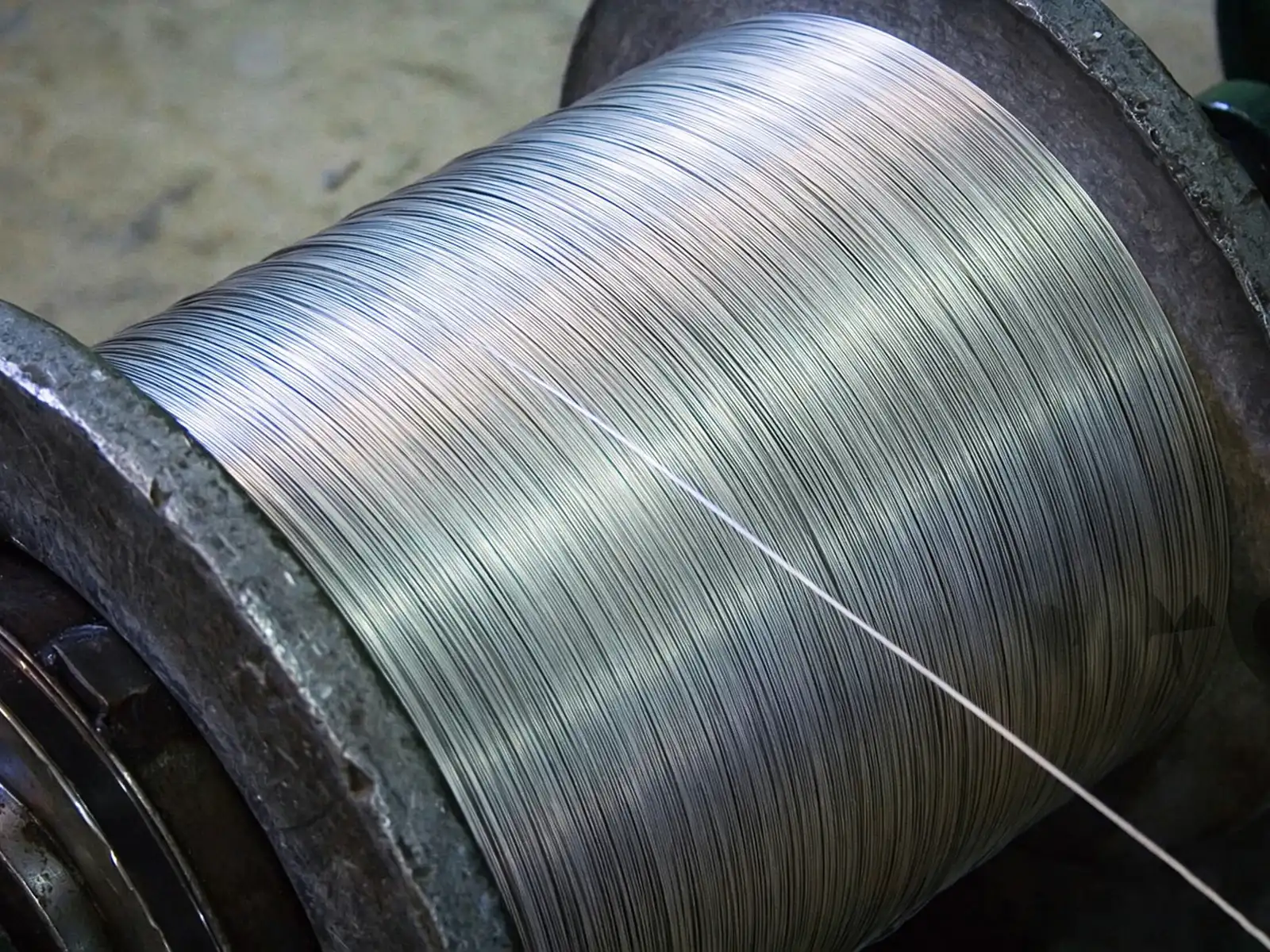
Titanium alloy wire includes alpha-beta and beta alloy options supplied in different conditions and formats. Compare grades using the part function and process sequence before requesting a specific diameter and surface.
1. Selection and Acceptance Decisions
- State whether the wire becomes a spring, fastener, formed part, medical component or welding consumable.
- For each candidate grade, record the delivered condition, any subsequent treatment and the condition for final acceptance.
- Specify coil or straight-length supply, diameter tolerance, surface requirements and the traceability expected with each lot.
Send a specification for this material with the grade, dimensions, quantity, intended use and the acceptance details listed above. Ask for confirmation of the quoted size, condition and documentation.
2. The Alloy Wire Ladder
Grade | Alloy | UNS | Tensile (min, annealed) | Elongation (min) | Role |
Grade 9 | Ti-3Al-2.5V | R56320 | ≥ 620 MPa | 15% | Cold-formable, weldable |
Grade 5 | Ti-6Al-4V | R56400 | ≥ 895 MPa | 10% | High-strength workhorse |
Grade 23 | Ti-6Al-4V ELI | R56401 | ≥ 860 MPa (F136) | 10% | Implant / fracture-critical |
Beta alloys | Ti-15V-3Al-3Cr-3Sn, Beta C | — | Per purchase spec | — | Springs, heat-treatable |
Table 1 — Annealed minimums per ASTM B863 (Grade 23 per ASTM F136); beta alloys are largely purchase-specification material.
3. Conditions That Change the Numbers
Tensile strength is a condition choice, not a grade constant. Grade 5 wire runs from ≥ 895 MPa annealed up to roughly 1, 000–1, 200 MPa cold-worked (with elongation falling to the 2–6% class), and cold-worked-plus-annealed intermediate states hold ~930–1, 050 MPa with 8–13% elongation for spring stock. Always tie the mechanical values on the certificate to the stated condition.
Applications
- Springs and elastic elements — aerospace and industrial springs ~40% lighter than steel, non-magnetic, corrosion-free;
- Fasteners — cold-worked Grade 5 wire headed into high-strength bolts and rivets;
- Welding — ERTi-5/9/23 filler per AWS A5.16 for matching alloy fabrications;
- Aerospace — engine-case welding wire, hydraulic-system springs (AMS 4955 class filler practice);
- Medical — Grade 23 ELI wire per ASTM F136 / ISO 5832-3 for implant components.
4. Standards
Alloy wire is ordered to ASTM B863; welding filler to AWS A5.16; aerospace filler practice to AMS 4955 (Ti-6Al-4V); implants to ASTM F136. See the titanium wire category.
FAQ
(1) Which titanium alloy wire is strongest?
Cold-worked Grade 5 reaches the 1, 000–1, 200 MPa class; among annealed grades, Grade 5 leads at ≥ 895 MPa, with Grade 23 just below at ≥ 860 MPa per F136.
(2) What is the difference between alloy wire and pure titanium wire?
Alloy wire is 2–3× stronger at similar density but draws with more care and costs more; pure wire wins on ductility, weldability and price.
(3) Which alloy wire cold-forms best?
Grade 9 (Ti-3Al-2.5V): 15% elongation and near-α structure make it the spring-and-form alloy.
(4) Can alloy wire be welded?
Yes — as filler and as base material, with TIG or laser under full inert-gas shielding; ELI chemistry (Grade 23) retains the most weld ductility.
(5) How do beta alloy wires fit in?
Beta alloys (Ti-15V-3Al-3Cr-3Sn, Beta C) offer heat-treatable spring wire with high elastic energy storage; most are ordered to purchase specifications rather than fixed ASTM grades. Custom size, condition, tolerance and documentation can be reviewed to the purchase specification.
Related Resources and Inquiry
See the titanium wire category or send your specification for an alloy wire review.
Baoji Titanium Valley Titanium Nickel Zirconium Material Processing Co., Ltd. produces titanium wire and welding wire per ASTM B863 / AWS A5.16 from a dedicated drawing line, from fine wire to welding filler on spools, under ISO 9001 / ISO 13485. Send your specification to sales@titaniumvalleys.com — Custom size, condition, tolerance and documentation can be reviewed to the purchase specification.
5. Related Reading
- Titanium Aluminum Vanadium Wire: Grades 5, 9 and 23 Compared
- Beta Titanium Wire: Choosing an Alloy for the Part
References
1. ASTM B863, Standard Specification for Titanium and Titanium Alloy Wire.
2. AWS A5.16/A5.16M, Specification for Titanium and Titanium Alloy Welding Electrodes and Rods.
3. ASTM E8/E8M, Standard Test Methods for Tension Testing of Metallic Materials.
4. SAE AMS 4955, Titanium Alloy Welding Wire, 6Al-4V.
5. ASTM F136, Standard Specification for Wrought Titanium-6Aluminum-4Vanadium ELI Alloy for Surgical Implant Applications.
This article is a technical reference. It does not constitute a commercial offer; dimensions, tolerances and documentation are confirmed at order review.
Published by: Titanium Valley Technical Team. Technical and quality review: pending.