
Anodized Titanium Wire: Color Samples and Finish Acceptance
- Anodized Titanium Wire
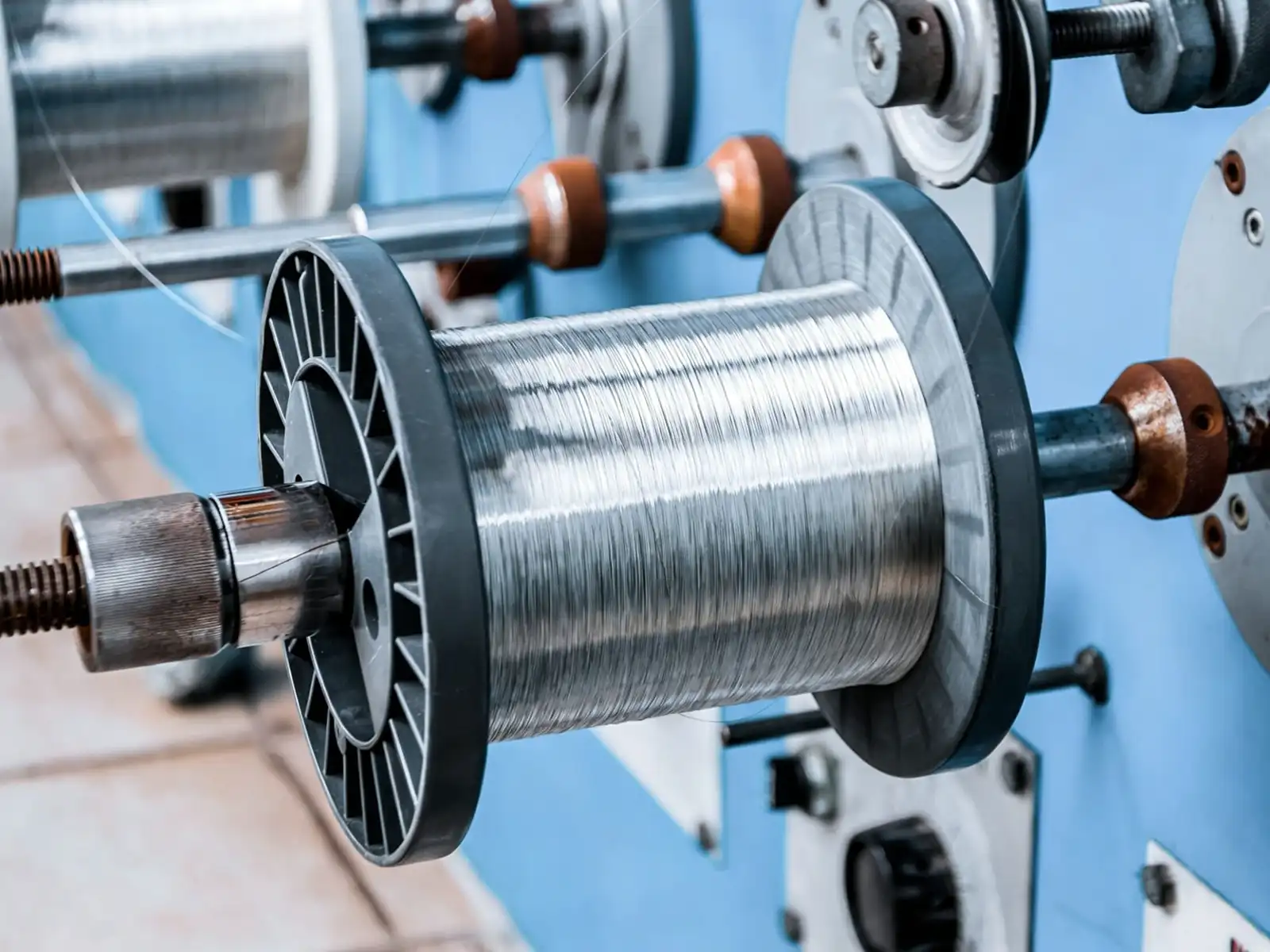
Anodized titanium wire is selected by its base alloy and oxide appearance. A useful order describes the wire dimensions, starting surface, target color and handling requirements, then uses an approved sample to define the finish.
1. Selection and Acceptance Decisions
- Approve a sample made from the same alloy and starting finish as the production wire.
- Describe allowable color variation, inspection lighting and whether inspection occurs before or after bending.
- For bonding or electrical contact, qualify the surface treatment for that function as well as appearance.
Send a specification for this material with the grade, dimensions, quantity, intended use and the acceptance details listed above. Ask for confirmation of the quoted size, condition and documentation.
2. What Anodizing Does to Wire
In an alkaline or acid electrolyte, applied voltage grows an adherent oxide film whose thickness scales with voltage. From roughly 20 nm upward the film acts as an interference filter, and the reflected color becomes a repeatable record of film thickness. Because the film is titanium oxide — a dielectric — it also insulates the wire surface electrically, which matters for coil winding and stacked spring applications where adjacent turns must not short.
3. Voltage–Color Reference
Voltage (approx.) | Color |
15–20 V | Bronze / brown |
25–30 V | Blue |
40–45 V | Yellow / gold |
55–60 V | Magenta / purple |
75–90 V | Green |
Table 1 — Approximate anodize colors by voltage; exact hues depend on electrolyte, alloy and surface preparation.
Why Wire Gets Anodized
- Color coding — batch, size and function identification on medical instruments, spring sets and surgical wire;
- Electrical insulation — dielectric oxide between coil turns and stacked spring elements, replacing coatings in low-voltage, clean environments;
- Bond preparation — Type 2 anodizing (AMS 2488 practice) stabilizes adhesive joints where wire is embedded in composites;
- Jewelry and decorative wire — the classic colored titanium wire of jewelry and craft work;
- Corrosion enhancement — a thicker, defect-free oxide improves passivity in aggressive media.
4. Quality Considerations
On wire, color uniformity is the honest acceptance test: spool-to-spool shade matching demands even current density around the circumference and clean incoming surface (dyne level ≥ 40 mN/m class). Specify the color target by voltage or by shade reference, and remember that sealed or dyed films change surface chemistry — do not dye wire that will later be bonded or used as an electrical contact. Custom size, condition, tolerance and documentation can be reviewed to the purchase specification.
FAQ
(1) Do anodized titanium colors come from dye?
No — the standard palette is pure light interference from the oxide film itself. Dyed finishes exist but change surface chemistry and are specified separately.
(2) Does the oxide insulate the wire?
Yes — titanium oxide is a dielectric, which is why anodized wire serves low-voltage coil and stacked-spring insulation duties. For higher voltages, verify the film thickness and dielectric strength against the design.
(3) Can Grade 2 and Grade 5 wire both be anodized?
Yes — CP grades and Ti-6Al-4V both anodize well; the voltage–color chart applies across them with minor hue shifts by alloy.
(4) How do I order anodized titanium wire?
Specify the required anodic treatment and acceptance criteria with the processor. Approve a representative sample for appearance and qualify any bonding or functional surface requirements for the intended assembly.
(5) Does anodizing weaken the wire?
Negligibly — the film is nanometers thick on wire tens of micrometers to millimeters across. The practical concern is surface chemistry, not load capacity.
5. Related Resources and Inquiry
Start from the titanium wire category and send your specification with the anodize requirement included.
Baoji Titanium Valley Titanium Nickel Zirconium Material Processing Co., Ltd. produces titanium wire and welding wire per ASTM B863 / AWS A5.16 from a dedicated drawing line, from fine wire to welding filler on spools, under ISO 9001 / ISO 13485. Send your specification to sales@titaniumvalleys.com — Custom size, condition, tolerance and documentation can be reviewed to the purchase specification.
6. Related Reading
- Titanium Grade 1 Wire: Diameter, Condition and End Use
- Titanium Aluminum Vanadium Wire: Grades 5, 9 and 23 Compared
References
1. ASTM B863, Standard Specification for Titanium and Titanium Alloy Wire.
2. SAE AMS 2487, Anodic Treatment of Titanium and Titanium Alloys, Solution pH 13 or Higher.
3. SAE AMS 2488, Anodic Treatment of Titanium and Titanium Alloys, Solution pH 12.4 Maximum.
This article is a technical reference. It does not constitute a commercial offer; dimensions, tolerances and documentation are confirmed at order review.
Published by: Titanium Valley Technical Team. Technical and quality review: pending.