
Why Choose the Zr702 Grade for Commercial Pure Zirconium Foil?
- Zirconium Foil
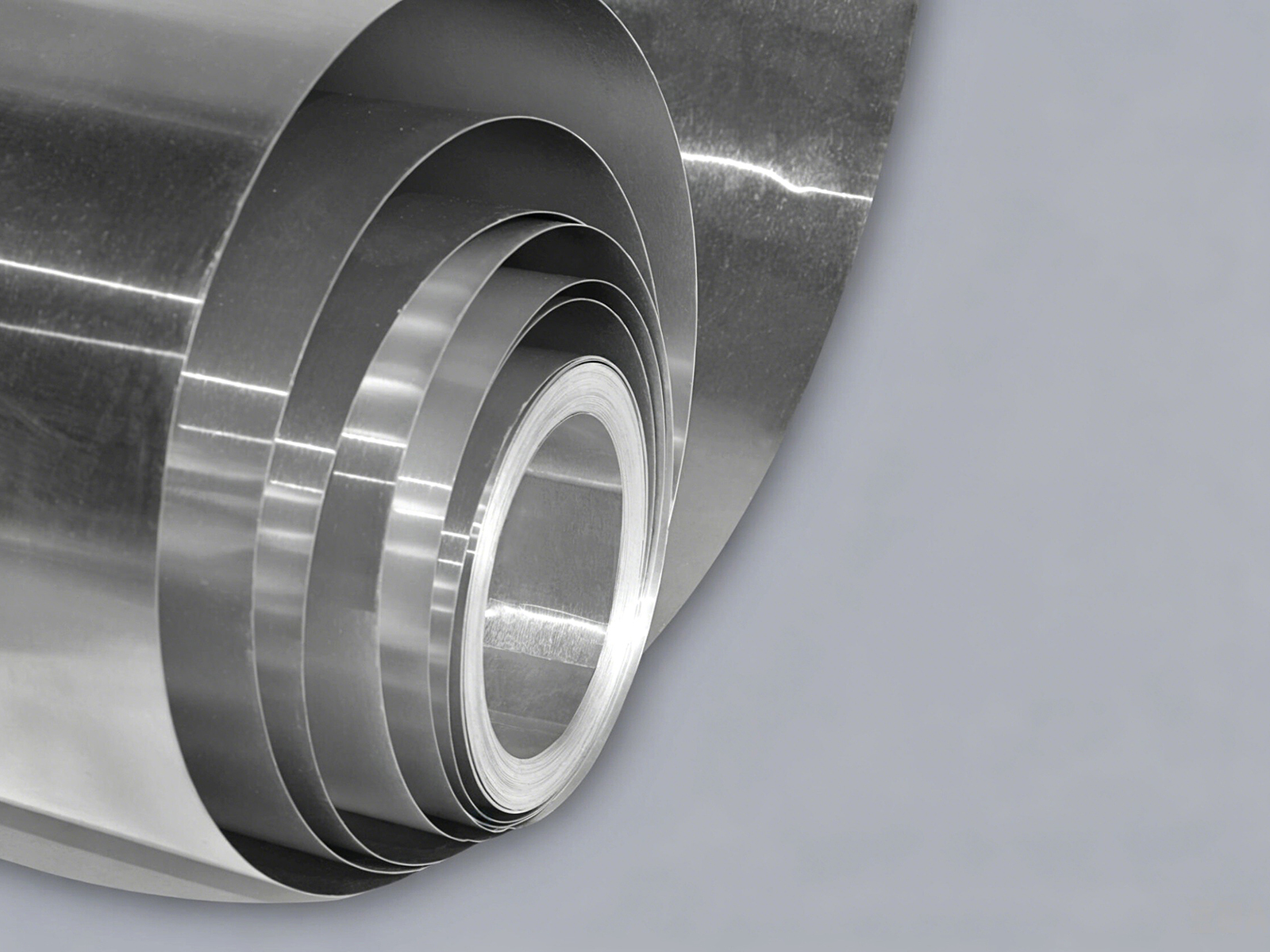
Direct engineering answer. Zirconium Foil should be evaluated against the finished component, product form, governing specification, downstream process and acceptance evidence. A general property value is an orientation tool; the released drawing, current certificate and inspection plan control the final decision.
In strongly acidic corrosive environments, material selection directly determines equipment service life and system safety. Zr702 foil (commercial pure zirconium foil), with its high-purity composition of Zr+Hf ≥ 99.2%, exhibits nearly inert corrosion resistance in hydrochloric acid, dilute sulfuric acid, organic acid, and mixed acid media. Compared with titanium foil or stainless steel, Zr702 offers superior stability in non-oxidizing acid environments with extremely low corrosion rates. Whether used in chemical anti-corrosion sealing structures, electrolytic electrode foil, or current collectors for new-energy batteries, Zr702 foil delivers longer service life and higher reliability, making it a cost-effective material choice for engineers under demanding operating conditions.
1. Core Composition and Grade Background of Zr702 Foil
(1) Definition and Standard Basis of the Zr702 Grade
Zr702 is the standard grade of commercially pure zirconium, corresponding to UNS R60702 and conforming to the ASTM B551 standard system. Its most critical compositional requirement is Zr+Hf ≥ 99.2%, with Hf content ≤ 4.5%, along with strict limits on impurity elements such as Fe+Cr, O, N, C, and H. This high-purity composition imparts extremely strong chemical inertness, which is the fundamental basis for its long-term stable performance in corrosive media.
(2) Practical Effects of Hf Content on Material Performance
Zirconium and hafnium coexist in nature, and the Hf ≤ 4.5% control limit ensures the chemical purity of the material. In industrial corrosion applications, trace amounts of hafnium do not weaken corrosion resistance; however, in nuclear applications, hafnium must be removed through dedicated purification processes because of its large neutron absorption cross-section. The Zr702 grade is positioned as commercial pure zirconium, and its hafnium content range is fully suitable for chemical, electrolytic, and sealing applications without requiring additional purification.
(3) Essential Differences from Alloy Grades Such as Zr705
Zr705 achieves higher strength through the addition of 2–3% Nb, but its ductility decreases relatively and its working window narrows. As an annealed commercially pure zirconium foil, Zr702 has an annealed tensile strength minimum typically on the order of 379 MPa (55 ksi) per ASTM B551 requirements; the minimum elongation value must be referenced according to the specific thickness and condition clauses, with common elongation requirements for thin strip/sheet typically in the range of approximately 16%–20%. Its soft condition provides excellent stamping, bending, and ultra-thin processing adaptability, making it better suited for high-precision formed structures such as sealing gaskets and thin-film electrodes, and it is the preferred choice in chemical corrosion protection and precision structure applications.
Table 1: Zr702 Chemical Composition Specification (ASTM B551, weight percent)
Element | Content Limit (wt%) |
Zr + Hf | ≥ 99.2 |
Hf | ≤ 4.5 |
Fe + Cr | ≤ 0.20 |
O | ≤ 0.16 |
N | ≤ 0.025 |
C | ≤ 0.05 |
H | ≤ 0.005 |
2. Performance Advantages of Zr702 Foil in Strongly Corrosive Media
(1) Actual Performance in Hydrochloric Acid and Dilute Sulfuric Acid Environments
Titanium materials in non-oxidizing acids (such as hydrochloric acid) can fail rapidly by perforation as the oxide film is destroyed, while stainless steel faces serious pitting and crevice corrosion risks. Zr702 foil exhibits extremely low corrosion rates in hydrochloric acid and dilute sulfuric acid environments at ambient to moderate temperatures, approaching a chemically inert state. This characteristic makes it an ideal material for key components in the chlor-alkali industry, pickling equipment, and electrolytic cells, significantly extending equipment maintenance intervals and reducing unplanned downtime.
(2) Long-Term Stability in Organic Acid and Mixed Acid Media
Acetic acid, formic acid, citric acid, and other organic acids are widely present in fine chemical, pharmaceutical, and food processing equipment. Zr702 also exhibits excellent corrosion resistance to the above media, with no abrupt change in performance in mixed acid media. Nickel materials generally provide good corrosion resistance to common organic acids such as acetic acid and formic acid, but service conditions must be evaluated in certain oxygen-bearing or oxidizing organic acid environments; Zr702 offers more economical and predictable long-term corrosion resistance and is especially suitable for high-purity processes that demand zero tolerance for metal ion release.
(3) Resistance to Pitting in Seawater and High-Chloride Environments
High chloride ion concentrations are a primary cause of pitting failure in stainless steel and aluminum alloys. The zirconia passive film on Zr702 is self-repairing in chloride environments, resisting the initiation and propagation of localized corrosion. Under ambient temperature, high-chloride, weakly oxidizing, or non-oxidizing conditions, Zr702 foil is generally more stable than conventional stainless steel and aluminum alloys; however, the specific pitting resistance under different chloride concentrations, temperatures, and oxidizing conditions must be evaluated according to the actual service conditions. In seawater desalination units, marine platform sealing structures, and chlorine-containing chemical systems, Zr702 foil can serve as an important material for high-reliability sealing and corrosion-resistant structures.
Table 2: Comprehensive Performance Comparison of Zr702, Ti Gr2, and Nickel 200
Comparison Item | Titanium Foil (Gr2) | Nickel 200 | Zr702 Foil |
Density (g/cm³) | 4.51 (low) | 8.89 (high) | 6.51 (medium) |
Resistance to Hydrochloric Acid | Poor (rapid failure) | Moderate | Excellent (nearly inert) |
Resistance to Organic Acids | Good | Good (acetic acid, formic acid, etc.) | Excellent |
Stability in Non-Oxidizing Acids | Weak | Moderate | Strong |
Pitting Resistance* | Moderate | Moderate–Good | Excellent (self-repairing oxide film) |
Primary Application Direction | Structural/oxidizing acid corrosion | Conductive/alkaline media | Strong acid corrosion/sealing/electrolysis |
Note: *Pitting resistance is a qualitative comparison under ambient temperature, high-chloride, weakly oxidizing/non-oxidizing conditions; actual engineering material selection should be evaluated based on the specific chloride concentration, temperature, and oxidizing conditions.
3. Precision Manufacturing Processes and Dimensional Specifications of Zr702 Foil
(1) Process Logic of Multi-Pass Cold Rolling and Intermediate Annealing
Zirconium has a relatively fast work-hardening rate, and simple multi-pass cold rolling alone can lead to embrittlement and thickness non-uniformity. Titanium Valley uses an alternating process of multi-pass cold rolling combined with intermediate annealing, with each annealing cycle completed in a continuous inert-atmosphere furnace and temperature fluctuation controlled within ±2℃. This process ensures uniform microstructure and stable ductility recovery even in ultra-thin gauges, and is the key technical path to achieving stable mass production of the 0.02 mm ultra-thin gauge.
(2) Technical Core of the 750 mm 20-High Precision Rolling Mill
When rolling ultra-thin wide strip with a conventional four-high mill, roll deflection can cause significantly increased transverse thickness deviation. Titanium Valley’s 750 mm 20-high precision rolling mill distributes the rolling force across multiple sets of backup rolls, stably controlling thickness tolerance within ±0.001 mm. This level of precision enables Zr702 foil to maintain a highly consistent cross-section thickness across its width, meeting the extremely demanding dimensional consistency requirements of applications such as electrolytic electrode foil and precision sealing gaskets.
(3) Surface Quality Assurance through Ultrasonic Cleaning and Vacuum Annealing
Zirconium surfaces readily form oxide films, and insufficient cleanliness impairs subsequent forming and welding quality. Titanium Valley uses a combined ultrasonic and alkaline cleaning process to ensure that the foil surface wetting tension stably reaches 44 dynes, providing a clean basis for stamping forming and precision welding. Continuous vacuum/inert-atmosphere annealing eliminates surface oxidation color variation and contamination risk, and the final product exhibits a uniform, bright surface condition that meets the cleanliness requirements of high-end chemical and precision instrument customers.
4. Typical Application Scenarios and Industry Value of Zr702 Foil
(1) Chemical Corrosion Protection: Gaskets, Linings, and Sealing Structures
In strongly acidic chemical plants such as chlor-alkali, nitric acid, and phosphoric acid facilities, corrosion-induced perforation of sealing gaskets and lining materials is a primary cause of leakage accidents. Annealed Zr702 foil offers good softness and compressibility, making it suitable for stamping into various irregular-shaped sealing gaskets and thin lining sheets that maintain shape stability and sealing effectiveness for long periods in strongly acidic environments, fundamentally reducing equipment leakage risk and maintenance costs.
(2) Electrolysis and Electroplating: Electrode Foil and Key Electrolytic Cell Components
Electrode materials in electrolytic cells must withstand both chemical attack from strong acid electrolytes and the electrochemical corrosion caused by continuous current. Zr702 foil provides stable electrochemical inertness, releasing no metal ions into the electrolyte, thereby ensuring high purity and stable current efficiency during electrolysis. Its electrical conductivity is superior to titanium and its cost is lower than platinum group metals, making it a cost-effective electrode material for chlor-alkali electrolysis, electroplating tank linings, and special electrochemical reactors.
(3) New Energy and Precision Instruments: Non-Magnetic, High-Stability Structural Components
New-energy battery systems impose stringent requirements on the corrosion stability and electrical conductivity uniformity of current collector materials. The non-magnetic characteristic and low impurity content of Zr702 foil make it suitable for magnetic shielding structures and sensor components in precision instruments, avoiding the influence of magnetic field interference on measurement accuracy. In vacuum equipment and high-end laboratory apparatus, its high melting point (1852℃) and low vapor pressure further ensure structural stability at elevated temperatures.
Table 3: Overview of Zr702 Foil Specification Parameters
Parameter | Standard Specification | Precision Custom Specification |
Thickness Range | 0.02–0.8 mm | 0.005–0.03 mm |
Width Range | 350–670 mm | Customizable on request |
Length Form | Coil (customizable) | Coil/cut-to-length sheet |
Thickness Tolerance | ±0.001 mm | ±0.001 mm |
Surface Condition | Bright/pickled | Bright/matte/custom |
Delivery Condition | Annealed/cold-worked | Predominantly annealed |
5. How to Evaluate the Core Capabilities of a Zr702 Foil Supplier
(1) Methods for Verifying Thickness Consistency and Lot-to-Lot Stability
Lot-to-lot performance variation is the most common quality risk in ultra-thin foil procurement. When evaluating suppliers, focus on verifying their thickness tolerance control capability (recommended requirement: ±0.001 mm or better), temperature uniformity records for intermediate annealing, and thickness distribution data across multiple consecutive coils. Production lines equipped with automated in-line thickness gauging can provide real-time feedback and correction of thickness deviation during rolling, serving as the technical guarantee for stable volume supply.
(2) Key Points for Reviewing Material Certificates and Third-Party Test Reports
Compliant procurement should require the supplier to provide a complete Mill Test Report covering chemical composition, mechanical properties, and dimensional inspection data, and indicating conformance to ASTM B551. For critical applications such as aerospace, nuclear, and high-end chemical industries, independent test reports from third-party laboratories should also be required to ensure that Zr+Hf content, O/N/H impurity elements, and mechanical property data are traceable and verifiable.
(3) Comprehensive Considerations for Custom Processing Capability and Large-Volume Supply
A single small-batch sample passing qualification does not mean that the supplier has stable mass production capability. Titanium Valley has an annual production capacity of 3, 000 tons with 90% production line automation, and has achieved stable batch delivery of ultra-thin wide zirconium foil in the 0.02–0.8 mm range. For customers with ongoing procurement needs, it is recommended to evaluate the supplier’s annual capacity ceiling, order delivery stability, and whether it supports custom processing of ultra-thin precision gauges (0.005–0.01 mm).
6. Conclusion
Zr702 foil, built on high-purity zirconium composition, demonstrates comprehensive advantages over titanium and stainless steel that cannot be replaced in application scenarios such as strong acid corrosion resistance, electrochemical stability, and precision sealing. From material composition to manufacturing processes and long-term reliability in actual service, Zr702 is a trustworthy long-term choice for the chemical, electrolysis, new energy, and precision instrument industries.
FAQ
(1) Q1: What is the fundamental difference in corrosion resistance between Zr702 foil and titanium foil (Gr2) in hydrochloric acid environments?
The protective oxide film on titanium foil is easily destroyed in non-oxidizing hydrochloric acid, leading to rapid perforation failure. The zirconia passive film on Zr702 is self-repairing in hydrochloric acid media, with extremely low corrosion rates and far superior service life compared with titanium, making it especially suitable for chlor-alkali and pickling applications.
(2) Q2: What is the minimum processable thickness of Zr702 foil? Are ultra-thin custom gauges supported?
Standard mass production gauges range from 0.02–0.8 mm, with ultra-thin custom gauges of 0.005–0.01 mm also supported for electrochemical research and ultra-high-precision vacuum equipment. Thickness tolerance can be stably controlled within ±0.001 mm to meet high-precision assembly requirements.
(3) Q3: When purchasing Zr702 foil, how can you confirm that the material conforms to ASTM B551?
The supplier should be required to provide a complete material report containing chemical composition and mechanical property data, stating the UNS R60702 grade and the ASTM B551 conformance declaration. For critical applications, it is recommended to also obtain an independent verification report issued by a third-party testing institution to ensure
data traceability.
Contact Us
As a manufacturer and supplier specializing in precision zirconium, titanium, and nickel foil, Titanium Valley (Baoji Titanium Valley Titanium Nickel Zirconium Materials Processing Co., Ltd.) offers custom production and stable volume supply of Zr702 foil. Please contact us by email: sales@titaniumvalleys.com
References
- ASTM International. ASTM B551/B551M-2021 Standard Specification for Zirconium and Zirconium Alloy Strip, Sheet, and Plate[S]. West Conshohocken: ASTM International, 2021.
- Liu Jianzhang. Nuclear Structural Materials[M]. Beijing: Chemical Industry Press, 2007.
- Zhang Baohong, Cong Wenbo, Yang Ping. Metal Corrosion and Protection[M]. Harbin: Harbin Engineering University Press, 2005.
- Xia Lanting, Huang Guiqiao. Marine Corrosion and Protection of Metallic Materials[M]. Beijing: Metallurgical Industry Press, 2003.
Engineering specification and verification framework
For Zirconium Foil, state grade, ordered product form, condition, nominal dimensions, tolerances, surface requirement, quantity and documentation in one controlled RFQ. The applicable product-form reference is ASTM B551, subject to the current edition and project-specific requirements. When tensile evidence is required, define the test method and sampling basis; ASTM E8/E8M or ISO 6892-1 may apply where consistent with the order.
| RFQ field | Required detail | Reason |
|---|---|---|
| Material identity | Grade, form, ASTM B551, condition | Prevents unintended substitution. |
| Geometry | Nominal size, tolerance, length or coil form | Defines production and inspection scope. |
| Process context | Forming, machining, joining, etching or assembly | Relates supply condition to actual manufacture. |
| Verification | Certificate, dimensional checks, lot identity | Creates a traceable acceptance plan. |
Risk review and incoming control
Common avoidable risks include tolerance stack-up, unclear condition, surface damage, undocumented substitution and loss of lot identity after cutting. At receipt, reconcile the purchase order, packing label and certificate before release to production. Define any supplementary testing, sampling and report format before quotation rather than after shipment.
Technical FAQ
Can catalogue values approve the material?
No. Final approval must use the ordered form, condition, standard, drawing, process route and service boundary.
What should an RFQ include?
Provide the drawing where available, grade and standard, dimensions, tolerance, condition, quantity, process context, service information and documentation requirement.
Product resources and technical quotation
Review the relevant zirconium product category. For a drawing-based review, request a technical quotation with the full specification.
References and use note
- ASTM B551, applicable edition, for the ordered product form.
- ASTM E8/E8M or ISO 6892-1 where the project specifies tensile verification.
- Project drawing, purchase specification, certificate and agreed inspection plan.
This engineering note supports procurement specification. It does not replace component design validation or the governing contractual standard.