
What Are the Characteristics of Zr702 Foil: Chemical Composition, Strength, and Performance?
- Zr702 foil
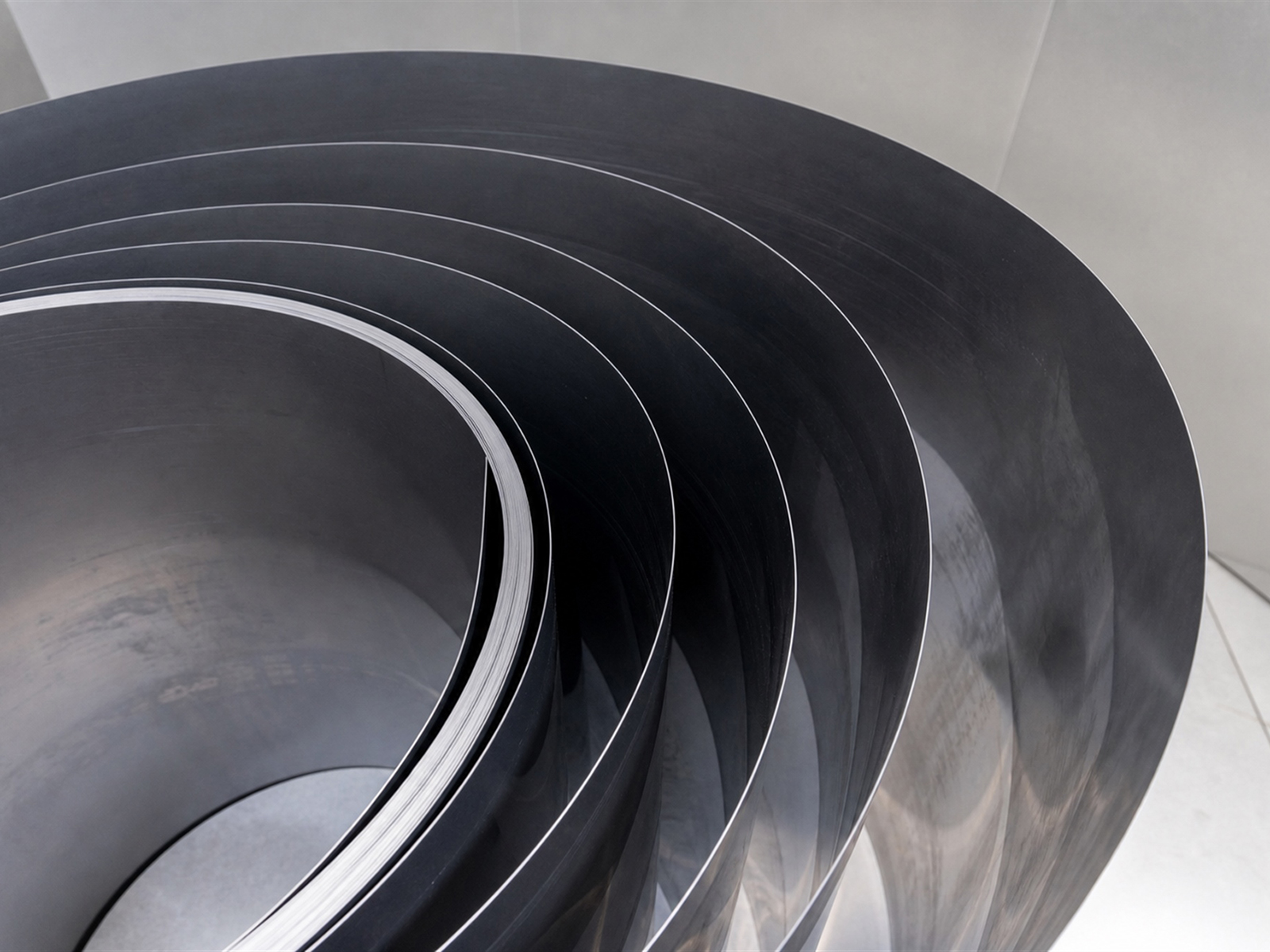
Direct engineering answer. Zr702 foil should be evaluated against the finished component, product form, governing specification, downstream process and acceptance evidence. A general property value is an orientation tool; the released drawing, current certificate and inspection plan control the final decision.
Zr702 foil is an ultrathin metal material based on commercially pure zirconium, with a typical composition of Zr + Hf ≥ 99.2%, a density of approximately 6.51 g/cm³, and a melting point of approximately 1852℃. In reducing corrosive media such as hydrochloric acid and dilute sulfuric acid, Zr702 foil typically exhibits better corrosion resistance than titanium foil and Nickel 200, but the actual corrosion rate is influenced by conditions such as concentration, temperature, oxidants, and flow velocity and cannot simply be described as “completely inert.” This article provides a technical analysis of Zr702 foil from five aspects, chemical composition, mechanical properties, manufacturing processes, corrosion resistance comparison, and typical applications, and explains its applicable boundaries.
1. Chemical Composition of Zr702 Foil: Purity and Engineering Boundaries
(1) Role and Significance of the Primary Element Zr + Hf
In Zr702 foil, the Zr + Hf content is not less than 99.2%. In oxidizing media or acid environments containing trace oxidants, zirconium readily forms a stable ZrO₂ film, which helps improve corrosion resistance; however, in acids that are completely free of oxidizing agents, the ability to form and maintain the oxide film must be evaluated in conjunction with the specific concentration and temperature and should not simply be described as “spontaneous formation of a dense oxide film.” As a congeneric element of zirconium, hafnium has chemical properties similar to those of Zr and is difficult to completely separate by conventional smelting. ASTM B551/R60702 permits Hf ≤ 4.5%. In non-nuclear chemical applications, small amounts of Hf typically have limited impact; however, in nuclear-grade or neutron-sensitive environments, the Hf content must be separately controlled.
(2) Rationale for Controlling Impurity Elements
Element | Limit | Primary control reason |
Fe+Cr (total) | ≤0.20% | Iron and chromium second-phase precipitation may reduce localized corrosion resistance |
O | ≤0.16% | Excessive oxygen increases brittleness and reduces cold formability |
N | ≤0.025% | Nitride precipitation affects microstructural uniformity |
C | ≤0.05% | Carbides may affect ductility and weldability |
H | ≤0.005% | Hydrogen absorption may pose a hydrogen embrittlement risk |
These limits are common control ranges in material standards and production practice; actual products should be verified against the mill test certificate and batch inspection, and minor exceedances should not be equated directly with macroscopic failure.
(3) Composition Design Principles and Standard Boundaries
The composition design of Zr702 prioritizes corrosion resistance stability over high strength. At atmospheric pressure, Zr702 typically exhibits a low corrosion rate in dilute hydrochloric acid and low- to medium-concentration sulfuric acid, but as temperature and concentration increase, or in the presence of oxidizing impurities or flow velocity changes, the corrosion behavior may change markedly. For example, 37% hydrochloric acid at 100℃ already exceeds the stable liquid-phase conditions at atmospheric pressure and will volatilize large amounts of HCl, so it should not be treated as a conventional material selection condition. The specific corrosion resistance boundary should be evaluated on the basis of corrosion data for temperature-concentration combinations or coupon testing.
2. Mechanical Properties of Zr702 Foil
(1) Supply Conditions and Typical Mechanical Properties
Zr702 foil is commonly supplied in the annealed condition and the cold-work-hardened condition. The annealed condition facilitates forming and welding, while the cold-work-hardened condition offers higher strength but reduced ductility. The table below lists typical values or technical agreement reference values for annealed Zr702 foil and should not be directly equated with the minimum values of the ASTM B551 standard.
Item | Reference value/description |
Tensile strength | ≤380 MPa (per technical specification) |
Proof strength (0.2% offset) | Approximately 200-300 MPa (typical value, depending on thickness and degree of annealing) |
Elongation | ≥20% (typical value; the minimum elongation of ASTM B551 R60702 annealed material depends on thickness and is typically about 16%) |
Hardness | Approximately 150-200 HV in the annealed condition (for reference only, not an acceptance criterion) |
Supply condition is not a mechanical property parameter and should be listed separately. At the time of purchase, the supply condition, thickness, and acceptance criteria must be clearly specified.
(2) Thickness Specifications and Thickness Tolerance Capability
When the thickness is reduced to 0.02-0.1 mm, the surface-area-to-volume ratio increases significantly, and the surface condition and microstructure have a greater influence on mechanical behavior. However, thickness tolerance is determined mainly by the precision of the rolling mill roll system, the thickness control system, tension control, and pass scheduling; grain size mainly affects formability and property uniformity and is not a direct prerequisite for ensuring thickness tolerance.
The tolerance capability for different thickness ranges should be described separately. For foil in the 0.02-0.05 mm range, ±0.001 mm corresponds to within ±5%; for 0.005 mm foil, ±0.001 mm corresponds to ±20%, which is clearly too wide. Therefore, the tolerances that can be reliably achieved must be specified by thickness range and written into the contract or quality agreement, rather than summarized with a single uniform value.
(3) Performance Comparison Between the Cold-Worked and Annealed Conditions and Selection Recommendations
The cold-work-hardened condition offers higher strength but reduced ductility and is suitable for structural components with high rigidity requirements and limited forming; the annealed condition is more suitable for secondary forming, stamping, welding, and similar operations. Selection should be based on subsequent processing strain, pressure-resistance rigidity, and welding requirements to avoid microcracking or excessive springback caused by an improper condition choice.
3. Manufacturing Processes for Zr702 Foil
(1) Vacuum Melting and Hot Rolling Preparation
Zr702 foil manufacturing begins with vacuum-melted zirconium ingots. Zirconium is sensitive to oxygen and nitrogen, and the melting vacuum level and protective measures directly affect impurity levels. In the hot rolling breakdown stage, the rolling temperature must be controlled to avoid microstructural or texture anomalies caused by the α→β phase transformation.
(2) Multi-Pass Precision Cold Rolling with Intermediate Annealing
Multi-pass cold rolling combined with intermediate annealing restores ductility and reduces internal stress. Intermediate annealing can be performed in a continuous inert-gas protective furnace or a vacuum furnace. In industrial temperature control, the achievable control accuracy should be described, with the control range typically given on the basis of furnace zones, furnace conditions, and process validation, rather than uniformly claiming ±2℃. Thickness control accuracy is implemented in accordance with the thickness-range agreement, and especially thin gauges require separate confirmation.
(3) Surface Treatment and Slitting
Surface cleaning uses a combined ultrasonic and alkaline solution process. After cleaning, the surface wetting tension should not be described as “stably controlled at 44 dynes”; it may instead be stated as “generally ≥44 dyn/cm is used as the acceptance value, with typical values in the range of 44-58 dyn/cm.” The slitting process reduces burrs and edge tearing by optimizing blade clearance and tension control; defect rates should be tracked by batch and documented in quality control records, and unverifiable claims such as “the lowest level in the industry” should not be used.
4. Corrosion Resistance Mechanism of Zr702 Foil and Comparison with Other Materials
(1) Passivation Differences Between Zirconium and Titanium
Titanium readily maintains passivation in the presence of oxidants or in oxidizing media, but in non-oxidizing acids the passive film may be unstable, resulting in pitting or general corrosion. The ZrO₂ film of zirconium is generally more stable in reducing acid environments, which is the main reason it outperforms titanium in media such as hydrochloric acid, but this stability is still affected by concentration, temperature, and impurities.
(2) Qualitative Material Comparison Under Typical Conditions
The table below applies only to dilute acid conditions at atmospheric pressure, low to medium temperatures, low oxidant content, and static or low flow velocity, and does not cover all service conditions.
Comparison dimension | Titanium foil (Gr2) | Nickel 200 | Zr702 foil |
Hydrochloric acid (e.g., ≤10%, ≤60℃) | Poor | Fair | Good/Excellent |
Dilute sulfuric acid (e.g., ≤10%, ≤60℃) | Poor | Fair | Good/Excellent |
Organic acids (e.g., acetic acid, up to boiling point) | Good | Good | Good/Excellent |
Density | 4.51 g/cm³ | 8.89 g/cm³ | 6.51 g/cm³ |
Non-magnetic | Yes | No | Yes |
Formability | Good | Good | Good |
This table is a qualitative ranking and cannot replace corrosion testing under specific service conditions.
(3) Material Selection Boundaries and Cost Considerations
Nickel 200 performs well in alkaline and neutral salt solutions but requires caution in hydrochloric acid or oxidizing mixed acids. The prices of nickel and zirconium are significantly affected by market fluctuations, and costs should be calculated on the basis of life-cycle, processing yield, and maintenance intervals. This article does not draw a fixed conclusion that “nickel costs significantly more than zirconium,” and it is recommended to estimate costs on a project-by-project basis.
5. Typical Application Scenarios and Limitations of Zr702 Foil
(1) Corrosion-Protection Sealing Structures in Chemical Processing
Zr702 foil can be used for gaskets, thin lining sheets, and bellows seals in systems such as hydrochloric acid and dilute sulfuric acid. Thickness selection must consider sealing pressure, flange rigidity, corrosion allowance, and stiffness limitations, and it should not be assumed that the same material covers all thickness levels. Compared with PTFE, PTFE is generally also resistant to aging and swelling in high-temperature strong acids; its main issues are cold flow/creep and seal stress relaxation. The advantages of Zr702 seals lie in rigidity, creep resistance, and temperature capability, but they must be verified for the applicable pressure and temperature conditions.
(2) Corrosion-Resistant Structural Components or Specialty Electrode Substrates in Electrolysis and Electroplating
Zr702 can be used as a corrosion-resistant structural component or a specialty experimental electrode substrate in strong acid electrolytes, but its electrical conductivity is relatively low, and the ZrO₂ film formed after anodizing is insulating; replacing titanium-based electrodes requires evaluation of electrical conductivity and interface resistance. In addition, the claim that “no impurity ions are leached into the electrolyte” is overly absolute: any metal may undergo trace dissolution or oxidation under electrolysis conditions, and zero release of impurity elements such as Fe and Cr cannot be guaranteed; this should be verified through testing or quality control data.
(3) Limited Applications in New Energy and Precision Instruments
The resistivity of Zr702 foil is markedly higher than that of aluminum and copper, so it is generally not suitable as a primary battery current collector. In applications such as experimental batteries with strong corrosive conditions and low conductivity requirements, electrochemical testing, and shielding/isolation layers for vacuum electronic equipment, its corrosion resistance and non-magnetic advantages can be evaluated. For ultrathin gauges of 0.005-0.03 mm, tolerances and yield must be confirmed against actual capability.
6. Conclusion
Zr702 foil has corrosion resistance potential superior to that of titanium foil and Nickel 200 in specific reducing strong-acid conditions, while also offering good cold formability and non-magnetic behavior. However, its application boundaries are clear: corrosion resistance is affected by concentration, temperature, oxidants, and flow velocity; tolerances for ultrathin gauges are not uniform; and its electrical conductivity and the insulating nature of ZrO₂ limit its use as electrodes or current collectors. Material selection should combine specific service conditions, standard specifications, and test data, and absolute terms such as “irreplaceable” or “preferred material” should not be used.
FAQ
(1) Q1: How Large Is the Corrosion Resistance Gap Between Zr702 Foil and Titanium Foil (Gr2) in Hydrochloric Acid Environments?
In non-oxidizing hydrochloric acid, the passive film of titanium foil readily dissolves, and rapid pitting may occur; Zr702 foil is generally more stable at suitable concentrations and temperatures. However, the service life multiple must be evaluated through coupon or corrosion testing under the specific temperature, concentration, flow velocity, and impurity conditions, and a uniform conclusion of “several to dozens of times” should not be given.
(2) Q2: What Thickness Tolerance Accuracy Can Be Achieved for Zr702 Foil, and Is Ultrathin Customization Supported?
Within the standard specification range of 0.02-0.8 mm, thinner gauges such as 0.02-0.05 mm can be controlled to within ±0.001 mm by agreement; for thinner gauges such as 0.005 mm, ±0.001 mm corresponds to ±20%, and whether this can be reliably achieved must be confirmed against batch capability. For ultrathin customization, it is recommended to provide the specific thickness and width so that a technical agreement can be signed between the supplier and the customer.
(3) Q3: Does Zr702 Foil Comply With International Standards, and Can Complete Quality Documentation Be Provided?
Zr702 foil can be supplied in accordance with ASTM B551 (UNS R60702) and GB/T 21183, among other standards, and quality documents covering chemical composition analysis, mechanical properties, and thickness tolerance can be provided. The scope of documentation should be defined in the contract or quality agreement.
Contact Us
Looking for a Zr702 foil manufacturer, supplier, or factory? Titanium Valley (Baoji Titanium Valley Titanium-Nickel-Zirconium Materials Processing Co., Ltd.) can supply Zr702 foil in batch quantities in gauges of 0.02-0.8 mm and widths of 350-670 mm, and supports OEM customization. Please confirm the specific tolerances, condition, and technical agreement in advance. Contact: sales@titaniumvalleys.com
References
- National Technical Committee on Nonferrous Metals Standardization. GB/T 21183-2017 Zirconium and Zirconium Alloy Plates, Strips, and Foils [S]. Beijing: China Standards Press, 2017.
- National Technical Committee on Nonferrous Metals Standardization. GB/T 26314-2010 Designation and Chemical Composition of Zirconium and Zirconium Alloys [S]. Beijing: China Standards Press, 2011.
- National Technical Committee on Nonferrous Metals Standardization. GB/T 3622-2012 Titanium and Titanium Alloy Strip and Foil [S]. Beijing: China Standards Press, 2012.
- Huang Boyun, Li Chenggong, Shi Likai, et al. China Materials Engineering Canon, Volume 4: Nonferrous Metals Materials Engineering [M]. Beijing: Chemical Industry Press, 2006.
- Xiao Jimei, Cao Chunan. Principles of Materials Corrosion Science [M]. Beijing: Chemical Industry Press, 2002.
Engineering specification and verification framework
For Zr702 foil, state grade, ordered product form, condition, nominal dimensions, tolerances, surface requirement, quantity and documentation in one controlled RFQ. The applicable product-form reference is ASTM B265, subject to the current edition and project-specific requirements. When tensile evidence is required, define the test method and sampling basis; ASTM E8/E8M or ISO 6892-1 may apply where consistent with the order.
| RFQ field | Required detail | Reason |
|---|---|---|
| Material identity | Grade, form, ASTM B265, condition | Prevents unintended substitution. |
| Geometry | Nominal size, tolerance, length or coil form | Defines production and inspection scope. |
| Process context | Forming, machining, joining, etching or assembly | Relates supply condition to actual manufacture. |
| Verification | Certificate, dimensional checks, lot identity | Creates a traceable acceptance plan. |
Risk review and incoming control
Common avoidable risks include tolerance stack-up, unclear condition, surface damage, undocumented substitution and loss of lot identity after cutting. At receipt, reconcile the purchase order, packing label and certificate before release to production. Define any supplementary testing, sampling and report format before quotation rather than after shipment.
Technical FAQ
Can catalogue values approve the material?
No. Final approval must use the ordered form, condition, standard, drawing, process route and service boundary.
What should an RFQ include?
Provide the drawing where available, grade and standard, dimensions, tolerance, condition, quantity, process context, service information and documentation requirement.
Product resources and technical quotation
Review the relevant titanium foil product category. For a drawing-based review, request a technical quotation with the full specification.
References and use note
- ASTM B265, applicable edition, for the ordered product form.
- ASTM E8/E8M or ISO 6892-1 where the project specifies tensile verification.
- Project drawing, purchase specification, certificate and agreed inspection plan.
This engineering note supports procurement specification. It does not replace component design validation or the governing contractual standard.