
What Are the Alloy Type, Properties, and Applications of Ti-15V-3Al-3Cr-3Sn Titanium Foil?
- Ti-15V-3Al-3Cr-3Sn Titanium Foil
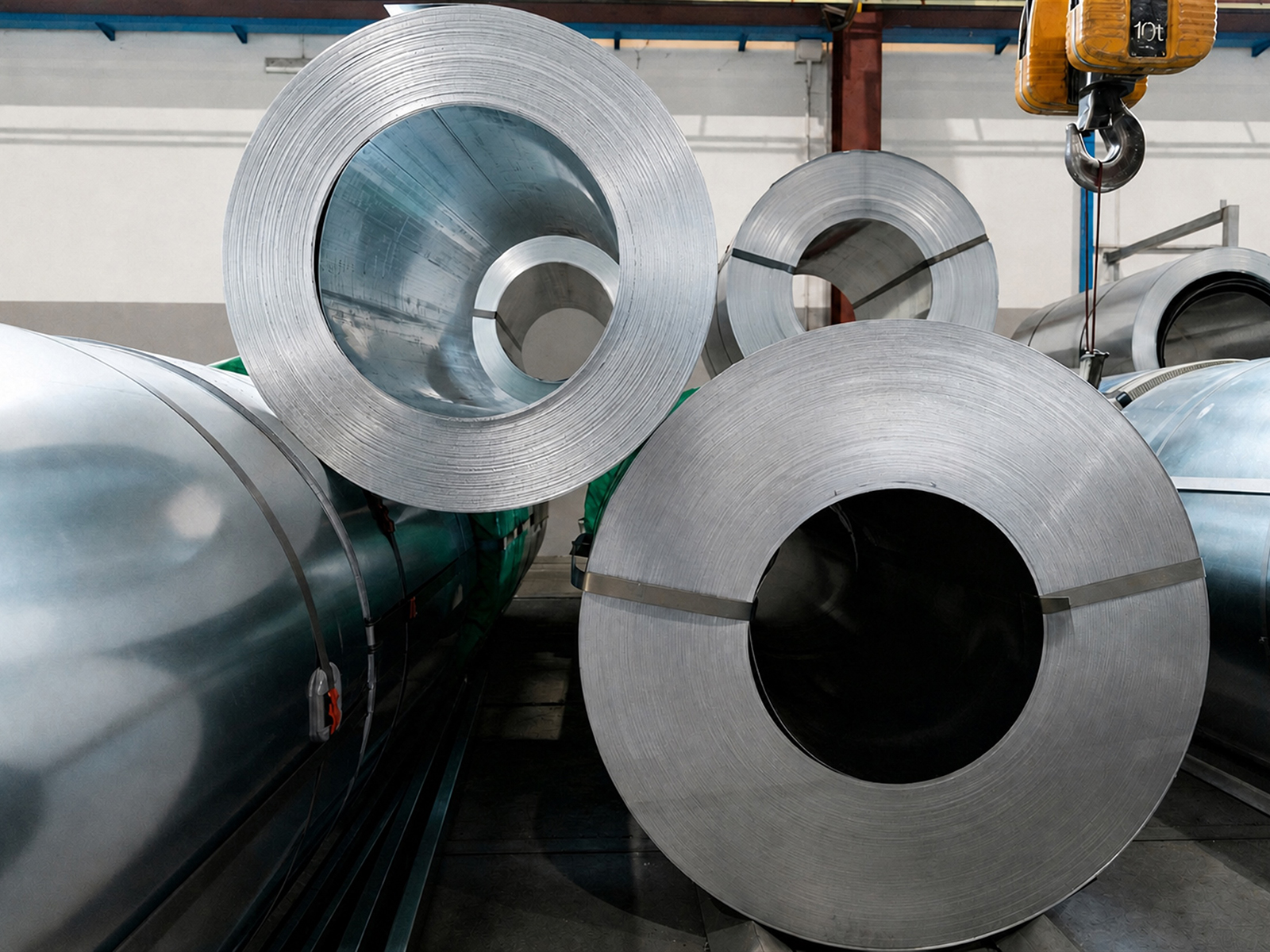
In aerospace, precision electronics, and high-end manufacturing, material selection often directly affects product performance, manufacturing cost, and reliability. Ti-15V-3Al-3Cr-3Sn titanium foil, a near-β titanium alloy foil, is emerging as one of the structural materials drawing engineers’ attention because of its unique combination of workability in the as-processed condition and high strength after aging. It resolves the difficulty of cold forming conventional high-strength titanium alloys, and its strength can be adjusted through aging heat treatment, allowing the same material to exhibit different mechanical states in different application scenarios. This article systematically reviews the technical logic and applicable boundaries of this material, covering alloy type, core properties, comparisons with similar materials, and key production-control points.
1. Alloy Type Analysis: Why Is It Called “Near-β”?
(1) The Logic Behind the β-Stabilizer Ratio
The alloy design of Ti-15V-3Al-3Cr-3Sn centers on the ratio of β-stabilizing elements. V (vanadium) is the primary β stabilizer: at 15%, it retains a large amount of metastable β phase at room temperature; Cr (chromium) further enhances β-phase stability. Al (aluminum) is an α stabilizer that increases strength and reduces density; Sn (tin) typically acts as a neutral or weakly α-stabilizing element in titanium alloys, contributing mainly solid-solution strengthening and improved hot strength. Aging strengthening comes primarily from the fine α phase precipitated by β-phase decomposition, rather than from Sn directly promoting α precipitation. This “multi-element synergistic” design gives the alloy high ductility in the annealed condition and high strength after aging [1, 2].
(2) The Essential Difference Between Near-β and α+β Alloys
α+β titanium alloys (such as Ti-6Al-4V, i.e., Gr5) contain substantial amounts of both α and β phases at room temperature; the two phases coordinate poorly during cold deformation, making cracks more likely. Near-β alloys, by contrast, are dominated by metastable β phase in the annealed condition, whose body-centered cubic structure offers more slip systems, giving them markedly better cold formability than α+β alloys. This difference in phase structure is the main reason Ti-15V-3Al-3Cr-3Sn can be subjected to complex stamping and bending operations, and it cannot be attributed simply to process-parameter adjustments.
(3) UNS Number and International Standard Certification
The alloy’s UNS number is generally R58153, though the number may vary slightly across product forms and standards organizations. The alloy has been incorporated into the relevant material specifications within the ASTM and major aerospace standard systems. It should be noted that a material-specification certification is a material-level certification; it does not mean that parts made from this material can be directly approved for installation by OEMs such as Boeing or Airbus. Part-level certification also requires part process validation, quality-system audits, and process qualification. Supply-chain entry barriers are not determined by the alloy grade alone.
2. Core Property Profile: Balancing Strength, Formability, and Corrosion Resistance
(1) Adjustable Strength Characteristics
Condition | Typical Ultimate Tensile Strength | Typical Elongation | Primary Applications |
Annealed (β-annealed) | ~800 MPa | ≥15% | Complex cold forming operations |
Aged (typically 480–540℃; actual schedule requires process validation) | 1100–1400 MPa | 6–10% | Aerospace structural parts in service |
Over-aged | 1000–1100 MPa | 10–13% | Balanced strength and toughness |
The aged strength range mentioned above depends on the specific aging temperature, holding time, heating rate, and cooling method. In engineering material selection, the measured process window should be used as the basis; the upper or lower limit should not be taken directly as a design value. This strength adjustability is the standout advantage of Ti-15V-3Al-3Cr-3Sn titanium foil over most metal foils. Engineers can first complete complex forming in the annealed condition, then raise strength to service requirements through aging heat treatment, thereby controlling formability and final strength as two separate steps.
(2) Cold Formability and Springback Control
Near-β titanium alloys offer better cold formability than Gr5, but compared with commercially pure titanium (Gr1, Gr2), they still exhibit relatively large springback. This challenge is especially pronounced in ultra-thin, wide foil. Skin-pass rolling (surface skin-passing) can improve flatness and reduce residual stress, helping to minimize springback variability in subsequent precision stamping and lamination. However, springback control is also affected by die compensation, deformation path, material lot condition, and lubrication, so the uncertainty cannot be fully eliminated by a skin-passing operation alone. In production, high-precision skin-pass mills can process thin-gauge foil, improving flatness consistency when tension, speed, and rolling force are properly matched. Equipment capability is only part of quality control and cannot be directly equated with springback-control accuracy.
(3) Engineering Significance of Corrosion Resistance and Non-Magnetic Properties
Ti-15V-3Al-3Cr-3Sn has a density of about 4.76 g/cm³ and a melting range of approximately 1600–1650℃, with exact values varying slightly with composition and test conditions [1]. Its corrosion resistance comes mainly from the surface oxide film, which is not a simple TiO₂ layer but a composite film containing oxides of Ti, V, Cr, and other elements. It generally exhibits good resistance to oxidizing acids such as nitric acid, but limited resistance to reducing acids such as hydrochloric and sulfuric acid; it cannot be broadly described as resistant to all acidic media. In addition, the alloy is non-ferromagnetic, making it suitable for magnetically sensitive environments such as MRI. However, “non-magnetic” does not mean it provides electromagnetic shielding; EMI shielding applications still require a separate evaluation of electrical conductivity and shielding effectiveness.
3. Side-by-Side Comparison with Gr5, Gr1, and Other Titanium Foils
(1) Performance Comparison of Major Titanium Foil Materials
Comparison Item | Gr1 | Gr2 | Gr4 | Gr5 (Ti-6Al-4V) | Ti-15V-3Al-3Cr-3Sn |
Alloy Type | Commercially pure titanium | Commercially pure titanium | Commercially pure titanium | α+β | Near-β |
Ultimate Tensile Strength | Low | Medium | Relatively high | High | High (can be raised further via aging) |
Cold Formability | Excellent | Good | Fair | Poor | Good (annealed) |
Strength Adjustability | None | None | None | Limited | Outstanding |
Typical Applications | Extreme forming parts | General industrial | Load-bearing structures | Aerospace structures | Aerospace precision structures, spring elements, etc. |
(2) Key Differentiation Against Gr5
Gr5 (Ti-6Al-4V) is the most widely used titanium alloy in the world, but its poor cold formability and high scrap rate in thin-walled part processing are well-known engineering problems. In the annealed condition, Ti-15V-3Al-3Cr-3Sn offers cold formability roughly comparable to that of Gr2 and can reach or approach Gr5’s strength level after aging. For manufacturers producing large numbers of thin-walled, curved, or irregular-cross-section structural parts, this material has the potential to reduce forming scrap rates and tooling wear. However, a full cost evaluation should not compare material prices alone; it must also account for aging heat treatment, equipment adaptation, higher unit material cost, lot-consistency validation, and downstream processing costs.
(3) Why Gr1 Cannot Replace Ti-15V-3Al-3Cr-3Sn?
Although Gr1 has excellent ductility, its strength is far from sufficient for structural load-bearing requirements. In applications that demand both “thin-walled lightweighting” and “high-strength load bearing,” Gr1’s strength ceiling is a clear limitation. Through alloy design and subsequent aging, Ti-15V-3Al-3Cr-3Sn decouples the forming and strengthening stages, alleviating to some degree the conflict between “high formability” and “high strength.”
4. Main Application Scenarios and Applicability Boundaries
(1) Aerospace Thin-Walled Structural Parts
In aerospace structural design, the integrated fabrication of large thin-walled parts has always been an important direction for weight reduction and structural efficiency. Excess weight, forming difficulty, and poor lot consistency are common issues. Ti-15V-3Al-3Cr-3Sn titanium foil can be formed into complex skins, frames, spring elements, or clamps in the annealed condition, with strength then raised by aging. Some aerospace material specifications have incorporated the alloy, but this is a material-level specification certification; whether a specific part can be installed still requires part process validation, quality-system qualification, and process certification per the OEM’s requirements. Existing research and engineering practice indicate application potential in thin-walled structural parts requiring cold forming and in spring-type parts.
(2) Electronic Components and EMI Shielding Materials
Application Direction | Key Performance Requirements | Ti-15V-3Al-3Cr-3Sn Fit: Advantages and Boundaries |
Non-magnetic shielding enclosures/brackets | Non-magnetic, lightweight, formable into thin walls | Non-ferromagnetic with good annealed-condition formability; however, intrinsic conductivity is low — if used for EMI shielding, additional conductive treatment and shielding-effectiveness validation are required |
Precision spring elements/sensors | Lightweight, non-magnetic, fatigue-resistant | High specific strength in the aged condition, non-magnetic, good fatigue performance; if high elastic modulus is the primary requirement, specialized elastic alloys such as beryllium copper should be evaluated |
Thin-walled structural supports | Dimensional stability, weldable/bondable | Good annealed-condition formability; surface quality satisfies downstream processing requirements |
It should be emphasized that Ti-15V-3Al-3Cr-3Sn is not a typical high-conductivity EMI shielding material. Its intrinsic electrical conductivity is low, and non-magnetic, seamless construction alone cannot guarantee shielding effectiveness. If used for shielding enclosures, surface conductivity must be improved through electroplating, electroless plating, or other surface metallization processes, and measured shielding effectiveness should be used as the design basis. Wide, thin-gauge foil can reduce the number of seams, but widths beyond 680 mm still require splicing; seam treatment and electrical continuity then need dedicated validation. For connector spring contacts where high elastic modulus and electrical conductivity are the primary criteria, titanium alloys are not advantageous; elastic conductive alloys such as beryllium copper and stainless steel should be considered first.
(3) Chemical Corrosion Protection and Laminated Composite Materials
In the field of chemical-equipment lining, traditional multi-section splicing creates numerous welds, and the weld zones are often the weak points for corrosion. Wide Ti-15V-3Al-3Cr-3Sn foil can reduce the number of joints within a 680 mm width, but large chemical-equipment linings usually cannot be covered entirely by a single sheet of foil and still require splicing; corrosion protection of the weld and lap zones is therefore critical.
In laminated composite applications, its dimensional stability and surface condition help it bond with heterogeneous materials such as resins and carbon fibers. Surface wetting tension of ≥40 dyn/cm can be tested per methods such as ASTM D2578 using dyne test liquids (e.g., formamide/ethylene glycol monoethyl ether series), with the surface cleaned and a specified dwell time before testing. This indicator reflects only wetting tendency; on its own it cannot prove interfacial bond reliability, which must be verified through peel, shear, or fatigue testing.
5. Typical Production Processes and Key Quality Control Points
(1) Precision Rolling and Thickness Tolerance
Ultra-thin, wide titanium foil production places high demands on mill stiffness, thickness-control systems, and tension control. Taking the 0.02 mm gauge as an example, thickness tolerance can be held within ±0.002 mm or ±10% of nominal thickness, as specified in the product specification sheet. A skin-pass rolling step can further improve flatness and surface uniformity. Mill speed, rolling force, and other parameters can be consistently converted into precision indicators only when matched with closed-loop thickness control, flatness measurement, and tension schedules.
(2) Atmosphere Protection and Surface Treatment
Near-β titanium alloys are sensitive to oxygen contamination, and oxidation during high-temperature processing can impair surface properties and aging response. Therefore, high-temperature steps such as annealing are typically carried out under vacuum or inert-gas protection. Although cold rolling, cleaning, and slitting cannot be performed entirely in a vacuum or inert atmosphere, contamination risk can be reduced by controlling environmental cleanliness, residual oil, and surface oxidation. Surface wetting tension can be tested with dyne test liquids (e.g., formamide/ethylene glycol monoethyl ether series) per methods such as ASTM D2578. The cleaning method, drying time, and surface condition should be specified before testing. ≥40 dyn/cm indicates that the surface has a certain degree of wettability, but it cannot by itself prove coating or bonding reliability.
(3) Slitting and Dimensional Accuracy Control
Precision slitting is a critical step before foil delivery. Slitting width tolerance can be held within ±0.1 mm, but this requires the combined assurance of tool condition, tension control, edge-guide systems, and incoming flatness. For automated assembly equipment, width consistency and edge quality directly affect feed stability, so burr height, edge deformation, and winding tension after slitting should also be inspected. The relationship between slitting parameters and width tolerance/edge quality should be validated with production-batch data rather than promised based on equipment parameters alone.
6. Conclusion
Ti-15V-3Al-3Cr-3Sn titanium foil builds on the annealed-condition formability and age-hardening capability of a near-β alloy, offering an alternative technical route between commercially pure titanium, which lacks strength, and Gr5, which is difficult to cold form. Its engineering value centers on cold-formed thin-walled structures, non-magnetic lightweight parts, and applications that can benefit from age hardening; for high-conductivity shielding or high-elastic-modulus connector spring contacts, its applicability boundaries warrant more careful assessment. Material data should be based on measured values and specific certification documents.
FAQ
(1) Q1: What is the aging heat-treatment temperature range for Ti-15V-3Al-3Cr-3Sn titanium foil, and how does it affect final strength?
Aging temperatures are typically in the 480–540℃ range, but the exact schedule must be determined in combination with part thickness, loading method, and target properties. At lower temperatures with longer times, the precipitated α phase is finer and more dispersed, giving higher strength with slightly lower elongation; by adjusting aging parameters, ultimate tensile strength can be varied over approximately 1000–1400 MPa. Engineering material selection should be based on the measured process window.
(2) Q2: How does the scrap rate of Ti-15V-3Al-3Cr-3Sn foil compare with that of Gr5 in cold stamping?
In the annealed condition, Ti-15V-3Al-3Cr-3Sn generally has a lower tendency toward cold bending and stamping cracking than Gr5. Because Gr5’s α+β duplex microstructure has limited coordinated-deformation capability, thin-walled parts tend to crack during stamping; Ti-15V-3Al-3Cr-3Sn, dominated by metastable β phase, has better ductility reserves. However, the scrap rate is also affected by the die, sheet thickness, lubrication, and process parameters, so it cannot be attributed to the material alone; total manufacturing cost should also include downstream aging heat treatment and process-validation costs.
(3) Q3: Can this material be used in medical devices, and has its biocompatibility been verified?
Ti-15V-3Al-3Cr-3Sn is currently used mainly in aerospace and industrial precision manufacturing. Its non-ferromagnetic character suits MRI-compatible applications, but the presence of Cr makes biocompatibility certification more complex than for Gr1/Gr2/Gr5. Medical-device applications require product-specific biocompatibility assessment; it is recommended to confirm suitability jointly with regulators and material experts.
Contact Us
Looking for a reliable Ti-15V-3Al-3Cr-3Sn titanium foil manufacturer, supplier, or plant? Titanium Valley has a complete in-house production line and a full-process quality-management system, supporting custom specifications (thickness ≥0.005 mm). Contact us: sales@titaniumvalleys.com
References
- Zhang Xiyan, Zhao Yongqing, Bai Chenguang. Titanium Alloys and Applications [M]. Beijing: Chemical Industry Press, 2005.
- Zhao Yongqing, Chen Yongnan, Zhang Xuemin, et al. Phase Transformations and Heat Treatment of Titanium Alloys [M]. Changsha: Central South University Press, 2012.
- Wang Jinyou, Ge Zhiming, Zhou Bangyan. Aerospace Titanium Alloys [M]. Shanghai: Shanghai Science and Technology Press, 1985.
- Zhao Yongqing. Current Status and Development Trends of Titanium Alloy Research in China and Abroad [J]. Progress in Materials for China, 2010, 29(5): 1-8.