
Why Is Gr2 Titanium Bar Widely Used in Industrial Manufacturing? An Analysis of Its Properties and Applications
- Gr2 Titanium Bar
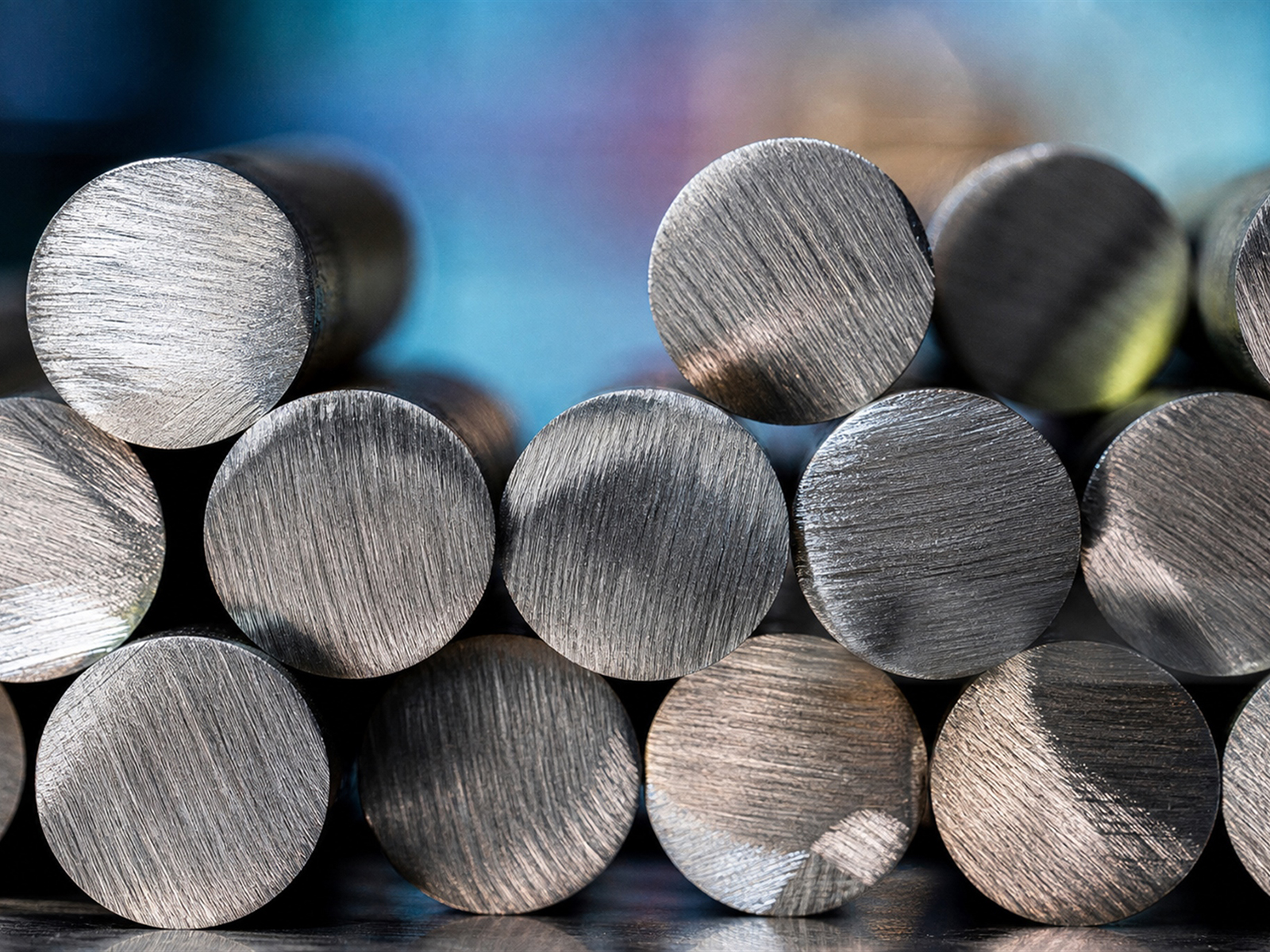
Direct engineering answer. Gr2 Titanium Bar should be evaluated against the finished component, product form, governing specification, downstream process and acceptance evidence. A general property value is an orientation tool; the released drawing, current certificate and inspection plan control the final decision.
Direct engineering answer. Gr2 Titanium Bar should be evaluated against the finished component, product form, governing specification, downstream process and acceptance evidence. A general property value is an orientation tool; the released drawing, current certificate and inspection plan control the final decision.
Direct engineering answer. Gr2 Titanium Bar should be evaluated against the finished component, product form, governing specification, downstream process and acceptance evidence. A general property value is an orientation tool; the released drawing, current certificate and inspection plan control the final decision.
In the chemical, marine, medical, new energy, and many other fields, Gr2 titanium bar (Grade 2 Titanium Rod), with its strong corrosion resistance, low density, and excellent biocompatibility, has become an important supplement or alternative material in specific corrosion and lightweighting scenarios where stainless steel and carbon steel cannot meet both requirements. It is neither the hardest nor the most expensive titanium grade, but because of its balanced properties and good processability, it is widely used in industrial manufacturing. Gr2 typically has a titanium content of approximately 99.2% or higher, and its composition control meets the balance and impurity upper-limit requirements of ASTM B348 Grade 2, corresponding to UNS R50400. Its use does not stem from “complete replacement” of other materials but from suitability to the service conditions. This article analyzes its properties, comparisons, applications, and processing and selection.
1. Core Properties of Gr2 Titanium Bar: Key Data and Boundaries
(1) Mechanical Properties: The Balance Between Strength and Toughness
Annealed Gr2 commercially pure titanium bar has a tensile strength ≥345 MPa, yield strength ≥275 MPa, and elongation after fracture ≥20%. Based on the minimum tensile strengths in ASTM B348 of approximately 240 MPa for Grade 1 and 345 MPa for Grade 2, Gr2 is about 44% higher in minimum tensile strength than Gr1 while retaining good plastic deformation capability and low susceptibility to brittle fracture under load. This strength range is well suited to industrial applications with moderate loads that require a toughness reserve.
(2) Corrosion Resistance: The Self-Healing Mechanism of the Oxide Film
A dense TiO₂ oxide film spontaneously forms on the surface of Gr2 titanium bar. Although extremely thin, it is relatively stable. When damaged, this film automatically repairs itself in oxygen-containing environments, providing good corrosion resistance in seawater, chlorides, nitric acid, organic acids, and many other corrosive media. However, the resistance of commercially pure titanium to reducing acids such as hydrochloric acid and sulfuric acid is strongly affected by concentration and temperature, and not all dilute acid environments are suitable. In certain seawater and chloride environments, Gr2 titanium bar frequently demonstrates markedly better pitting and crevice corrosion resistance than 304/316L, but the service life multiplier must be evaluated in combination with the stainless steel grade, temperature, chloride ion concentration, flow rate, pH, and oxygen content.
(3) Physical Characteristics: Low Density and Near Non-Magnetic Behavior
With a density of only 4.51 g/cm³, it is about 57% of the density of stainless steel. When replacing stainless steel at equal volume, weight is reduced by about 43%, helping to lower transportation and installation costs. The relative magnetic permeability of Gr2 titanium bar is typically about 1.00005–1.0001, making it nearly non-magnetic and suitable for applications highly sensitive to magnetic field interference, such as medical MRI equipment and precision instruments.
Property | Gr2 Titanium Bar | 304 Stainless Steel | ASTM A36 Carbon Steel |
Density (g/cm³) | 4.51 | 7.93 | 7.85 |
Tensile Strength (MPa) | ≥345 | ≥515 | 400–550 (typical) |
Seawater Corrosion Resistance | Excellent | Fair | Poor |
Non-Magnetic | Yes (nearly non-magnetic) | Essentially non-magnetic in annealed condition; may become weakly magnetic after cold working | No |
Biocompatibility | Excellent | Fair | Poor |
2. Gr2 Titanium Bar vs. Traditional Metals: The Substitution Logic in Corrosion and Lightweighting Applications
(1) Replacing Stainless Steel: Lifecycle Cost in Corrosive Environments Requires Case-by-Case Evaluation
In near-neutral, oxygen-containing environments with high chloride ion concentrations, 304 or 316L stainless steel is prone to pitting and crevice corrosion, leading to premature equipment failure and frequent maintenance. The oxide film on Gr2 titanium bar is typically more stable in such environments and requires no additional coatings or cathodic protection. However, the purchase price of Gr2 titanium bar is typically significantly higher than that of 304/316L—by several times rather than only 10%–15%. Whether the total cost is lower depends on the specific service conditions, replacement cycles, and installation and downtime costs, and cannot be generalized.
(2) Partially Replacing Carbon Steel: Reducing Rust-Related Maintenance in Hot, Humid Environments
Carbon steel rusts readily in humid, acidic, or salt-spray environments and requires regular painting, galvanizing, or component replacement. Gr2 commercially pure titanium bar requires virtually no additional anti-corrosion treatment in atmospheric and marine atmospheric corrosion environments, making it suitable for non-load-bearing or corrosion-priority components exposed long-term to outdoor or hot, humid industrial environments. However, Gr2 has lower strength than common structural carbon steel and should not be used in high-load structural applications.
(3) A Complement to Material Selection Thinking: One Material Covers Multiple Corrosive Service Conditions, But With Limits
Industrial sites often face complex service conditions where multiple corrosive media act simultaneously, and no single anti-corrosion material can fully cover all requirements. Thanks to its broad-spectrum resistance to a variety of corrosive media combined with moderate mechanical strength, Gr2 titanium bar can simplify some anti-corrosion material selections and reduce the inventory pressure of stocking multiple material types. However, it cannot cover high-strength, high-temperature oxidation, abrasive, or high-load service conditions, and material selection should still be evaluated against the specific media, temperature, pressure, and loads.
3. Mainstream Industrial Applications of Gr2 Titanium Bar
(1) Chemical Anti-Corrosion: Heat Exchangers, Reactors, and Fasteners
In chlor-alkali, pharmaceutical, electroplating, and wastewater treatment applications, Gr2 titanium bar is widely machined into heat exchanger tubesheets, agitator shafts, impellers, flanges, bolts, and other components. These parts are in long-term contact with corrosive media, and the chemical inertness of titanium generally gives it a longer service life than traditional materials in such applications.
(2) Marine Engineering: From Desalination to Non-Load-Bearing Offshore Platform Components
Applications such as desalination plants, seawater piping, heat exchangers, flanges, fasteners, and marine equipment components place extremely high demands on a material’s tolerance to chloride ions. Gr2 titanium bar performs stably in all three corrosion zones—full immersion, splash, and marine atmosphere—and is one of the important material selections in marine engineering. However, Gr2 commercially pure titanium has relatively low strength and is unsuitable as a primary load-bearing structural component; it is used more for corrosion-resistant non-load-bearing parts such as seawater piping, heat exchangers, flanges, and fasteners.
(3) Medical Devices: Low-Load Implants and Surgical Instruments
Gr2 titanium bar offers good biocompatibility, is non-toxic, does not cause significant rejection reactions, has a low tendency for metal ion release, and is nearly non-magnetic. Common applications include surgical instrument structural components, low-load implants, and dental restoration substrates. It should be noted that load-bearing orthopedic implants more commonly use Grade 4 commercially pure titanium or Ti-6Al-4V ELI, while Gr2 is used more for low-load implants, surgical instruments, or substrates.
(4) New Energy and Environmental Protection: Electrolytic Hydrogen Production and Desulfurization Equipment
In new energy applications such as water electrolysis for hydrogen production, fuel cells, and electrochemical energy storage, Gr2 titanium bar is commonly used as electrode substrates, bipolar plate substrates, hangers, and other electrochemical functional components. Anodes typically require functional coatings such as DSA/MMO and are not directly made of bare Gr2. In desulfurization, denitrification, and pickling equipment, titanium’s tolerance to acidic media contributes to long-term stable equipment operation.
Application Field | Typical Components | Key Performance Requirements |
Chemical anti-corrosion | Heat exchangers, agitator shafts, bolts | Acid and chloride resistance |
Marine engineering | Piping, flanges, heat exchangers, fasteners | Seawater and salt-spray resistance |
Medical devices | Surgical instrument structural components, low-load implants, dental substrates | Biocompatibility, nearly non-magnetic |
New energy | Electrode substrates/bipolar plate substrates, hangers, electrolyzer components | Electrochemical corrosion resistance |
Food/pharmaceutical | Shafts, rods, fasteners | Non-toxic; must meet specific hygiene regulations |
4. Processing Characteristics and Specification Selection Guide for Gr2 Titanium Bar
(1) Cold and Hot Workability: Formable and Weldable, but Process Control Is Required
Gr2 commercially pure titanium bar has good cold forming capability and can be processed into precision or shaped parts through cold rolling, stamping, and bending. Welding should use well-shielded processes such as TIG, plasma arc welding, laser welding, or electron beam welding; MIG welding offers poor shielding and high spatter and is rarely used for precision commercially pure titanium parts. Whether post-weld heat treatment is required depends on cross-section thickness and restraint conditions; thin-section, low-restraint welds generally do not require post-weld heat treatment, while thick-section or highly restrained welds may require stress-relief annealing. In addition, titanium has poor thermal conductivity and work-hardens readily, so machining requires dedicated tooling, low speeds, generous cooling, and process control, and it cannot be treated the same as ordinary free-machining metals.
(2) Specification System: Classified by Cold Drawn, Hot Rolled, and Forged
Conventional specifications are recommended to be divided by the following boundaries:
- Cold-drawn small-diameter bar: φ4–φ30 mm, for precision machining;
- Hot-rolled medium-diameter bar: >φ30–φ100 mm;
- Forged large-diameter bar: >φ100–φ300 mm, usually custom-made to order.
Cross-section shapes include round bar, square bar, and hexagonal bar. Lengths can be supplied in the annealed, hot-worked, or cold-worked condition and cut to specified dimensions, meeting diverse procurement requirements.
(3) Surface Treatment and Dimensional Accuracy Control
The production process covers double or triple vacuum arc remelting (VAR), forging and cogging, hot rolling or hot forging, stress-relief annealing, pickling and descaling, turning or grinding, straightening, precision cutting to length, and non-destructive testing. This process chain helps control internal microstructural uniformity, dimensional tolerances, and surface quality of bar products to meet the stringent requirements of high-end manufacturing.
5. How Do You Determine Whether Gr2 Titanium Bar Suits Your Service Conditions?
(1) Assessing the Corrosive Media: Consider Media Type, Concentration, and Temperature First
When the service media are seawater, chloride solutions, nitric acid, organic acids, or acid/alkaline solutions at specific concentrations and temperatures, Gr2 titanium bar is often a more durable choice than some stainless steels. However, the resistance of commercially pure titanium to reducing acids such as hydrochloric acid and sulfuric acid is strongly affected by concentration and temperature, and not all dilute acid or strong alkaline environments are suitable. In near-neutral, oxygen-containing chloride environments, 316L stainless steel may show an increasing risk of pitting and crevice corrosion as chloride ion concentration and temperature rise, but “200 ppm” is not an absolute corrosion threshold for 316L and must be evaluated in combination with temperature, pH, oxygen content, and flow rate.
(2) Assessing the Temperature Range: Good Low-Temperature Toughness; Derating and Oxidation Assessment Required at High Temperatures
Gr2 titanium bar retains good toughness in cryogenic environments and can be used in some low-temperature liquid storage and transport components. Around 300℃, strength decreases with increasing temperature, and under certain conditions the strength retention ratio may exceed 80%; the claim of short-term tolerance to approximately 400℃ must be judged in combination with material condition and allowable oxidation. At high temperatures, oxidation, hydrogen absorption, and allowable stress derating must also be considered, and short-term strength retention alone should not be used as the basis for material selection.
(3) Assessing the Weight-Reduction Requirement: Distinguish Equal-Volume from Equal-Strength Design
Gr2 has a density of 4.51 g/cm³ and is about 43% lighter than 304 stainless steel at equal volume. However, Gr2 is weaker than 304, so equal-strength design requires an increased cross-section; based on a rough calculation using minimum mechanical values, the weight reduction is around 15%. A weight reduction approaching 43% is achieved only in equal-volume replacement or where strength margins permit. Gr2 is therefore better suited to components that are weight-sensitive, lightly loaded, or have large strength margins.
6. Conclusion
The widespread use of Gr2 titanium bar stems from the balance it achieves among corrosion resistance, lightweighting, biocompatibility, and process suitability. It is not the most “extreme” material, nor is it the answer for every service condition, but after evaluation of media, temperature, loads, and lifecycle cost, it can be an important choice for long-life corrosion resistance and weight-reduction requirements.
FAQ
(1) Q1: What are the main differences between Gr2 titanium bar and Gr1 titanium bar?
Gr1 has higher purity and slightly lower strength; Gr2 raises the minimum tensile strength to approximately 345 MPa through controlled oxygen content. Based on minimum values, Gr2 is about 44% higher than Gr1 (approximately 240 MPa), providing greater load-bearing capacity while retaining good plasticity, making it better suited to industrial applications with moderate loads.
(2) Q2: Is Gr2 titanium bar suitable for direct use in food-contact equipment?
Gr2 titanium bar is non-toxic and has a low tendency for metal ion release, but food-contact compliance must be determined according to specific regulations such as FDA and EU requirements, surface condition, and contact media, and cannot be inferred from “non-toxic” alone.
(3) Q3: Does Gr2 titanium bar require heat treatment after welding?
Thin-section, low-restraint welds generally do not require post-weld heat treatment; thick-section or highly restrained welds may require stress-relief annealing. Gr2 commercially pure titanium has good weldability and should be welded with well-shielded processes such as TIG, plasma arc welding, laser welding, or electron beam welding.
Contact Us
For information on Gr2 titanium bar specifications, supply, and technical support, please contact: sales@titaniumvalleys.com
References
- Zhang Xiyan, Zhao Yongqing, Bai Chenguang. Titanium Alloys and Applications [M]. Beijing: Chemical Industry Press, 2005.
- Wang Guisheng, Tian Rongzhang. Handbook of Titanium and Titanium Alloy Processing [M]. Changsha: Central South University Press, 2005.
- Huang Boyun, Li Chenggong, Shi Likai. China Materials Engineering Canon: Volume 4 Nonferrous Metal Materials [M]. Beijing: Chemical Industry Press, 2006.
- Welding Institution, Chinese Mechanical Engineering Society. Welding Handbook: Volume 2 Welding of Materials [M]. Beijing: China Machine Press, 2007.
- Editorial Group of the Handbook of Rare Metal Materials Processing. Handbook of Rare Metal Materials Processing [M]. Beijing: Metallurgical Industry Press, 1984.
Engineering specification and verification framework
For Gr2 Titanium Bar, state grade, ordered product form, condition, nominal dimensions, tolerances, surface requirement, quantity and documentation in one controlled RFQ. The applicable product-form reference is ASTM B348, subject to the current edition and project-specific requirements. When tensile evidence is required, define the test method and sampling basis; ASTM E8/E8M or ISO 6892-1 may apply where consistent with the order.
| RFQ field | Required detail | Reason |
|---|---|---|
| Material identity | Grade, form, ASTM B348, condition | Prevents unintended substitution. |
| Geometry | Nominal size, tolerance, length or coil form | Defines production and inspection scope. |
| Process context | Forming, machining, joining, etching or assembly | Relates supply condition to actual manufacture. |
| Verification | Certificate, dimensional checks, lot identity | Creates a traceable acceptance plan. |
Risk review and incoming control
Common avoidable risks include tolerance stack-up, unclear condition, surface damage, undocumented substitution and loss of lot identity after cutting. At receipt, reconcile the purchase order, packing label and certificate before release to production. Define any supplementary testing, sampling and report format before quotation rather than after shipment.
Technical FAQ
Can catalogue values approve the material?
No. Final approval must use the ordered form, condition, standard, drawing, process route and service boundary.
What should an RFQ include?
Provide the drawing where available, grade and standard, dimensions, tolerance, condition, quantity, process context, service information and documentation requirement.
Product resources and technical quotation
Review the relevant titanium bar or rod product category. For a drawing-based review, request a technical quotation with the full specification.
References and use note
- ASTM B348, applicable edition, for the ordered product form.
- ASTM E8/E8M or ISO 6892-1 where the project specifies tensile verification.
- Project drawing, purchase specification, certificate and agreed inspection plan.
This engineering note supports procurement specification. It does not replace component design validation or the governing contractual standard.