
What Are the Tensile Strength and Elongation of Gr4 Titanium Wire? An Analysis
- Gr4 titanium wire
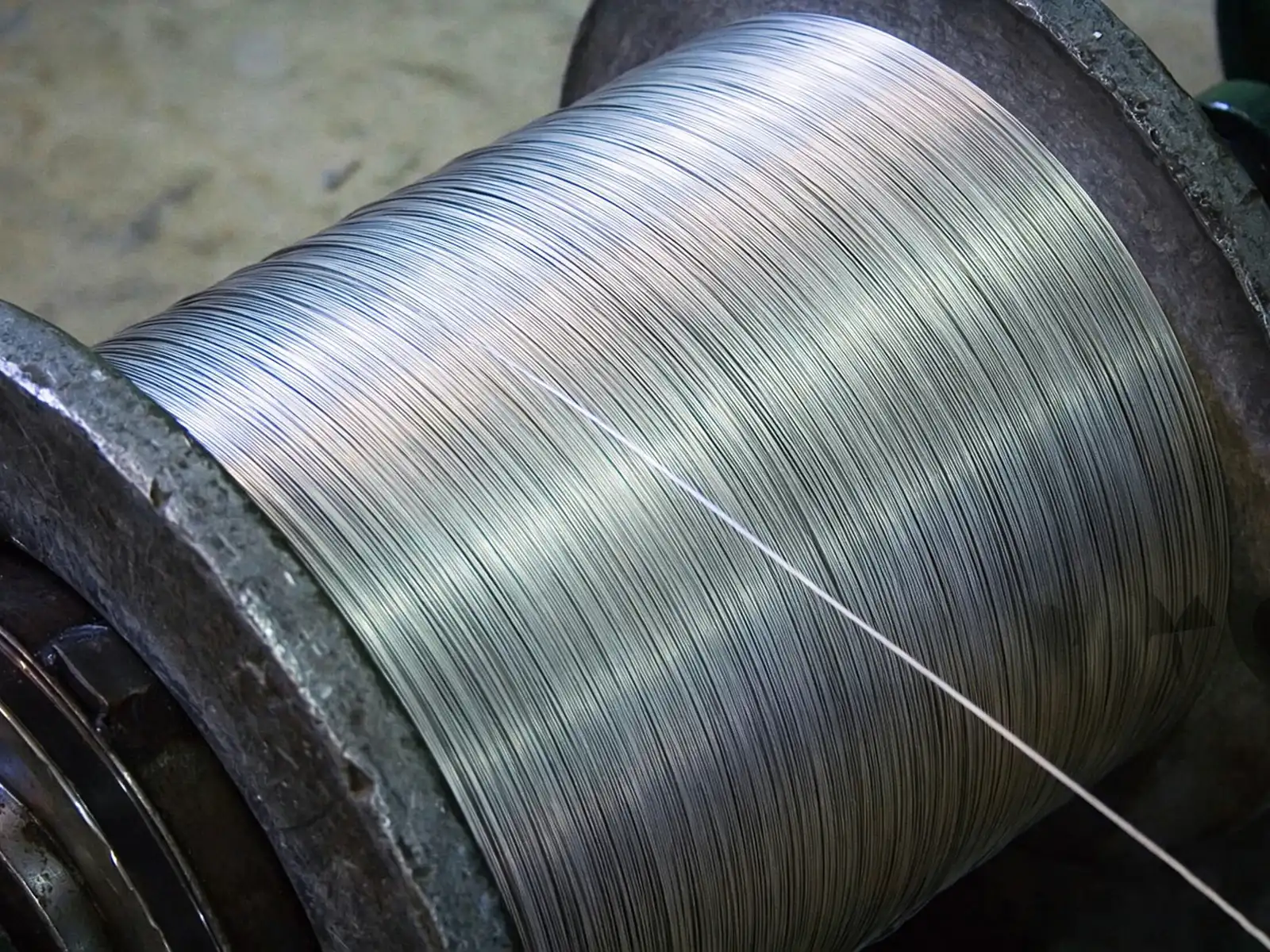
Direct engineering answer. Gr4 titanium wire should be evaluated against the finished component, product form, governing specification, downstream process and acceptance evidence. A general property value is an orientation tool; the released drawing, current certificate and inspection plan control the final decision.
In industrial material selection, engineers typically focus on three questions for metal wire: whether the strength is adequate, whether the ductility is sufficient, and whether the risk of brittle fracture is controllable. Gr4 Titanium Wire (Grade 4 commercially pure titanium wire) is the higher-strength grade among commercially pure titanium, and its combination of tensile strength ≥550 MPa and elongation ≥15% makes it attractive in moderately high-strength applications such as chemical corrosion protection, marine engineering, and precision machinery. This article examines the engineering meaning behind these two parameters from the perspectives of standard basis, processing technology, and inspection verification, helping procurement and design personnel use Gr4 titanium wire more rationally.
1. Mechanical Property Baseline of Gr4 Titanium Wire: What Do Tensile Strength and Elongation Mean?
(1) Tensile Strength ≥550 MPa: Where Does This Value Come From?
Gr4 is a commercially pure titanium predominantly composed of the α phase. Its strength improvement comes not mainly from alloying additions such as aluminum and vanadium, but from lattice distortion caused by interstitial atoms, primarily oxygen, nitrogen, and carbon, as well as substitutional atoms, primarily iron. These atoms increase resistance to dislocation movement, thereby raising both yield strength and tensile strength. Gr4 has a maximum oxygen content of 0.40% and a maximum iron content of 0.50%, significantly higher than Gr1 and Gr2. Under the common requirements of ASTM B863, the minimum tensile strength of Gr4 titanium wire is 550 MPa and the minimum yield strength is 483 MPa. These are delivery acceptance limits, not theoretical or typical values.
(2) Elongation ≥15%: Strength and Ductility Are Not Necessarily Mutually Exclusive
High strength does not necessarily mean low ductility. Gr4 titanium wire has an elongation after fracture of ≥15%, indicating that the material retains a certain plastic deformation capability before tensile fracture. This characteristic is especially important for weld joints: under thermal cycling and restraint stresses, the weld zone needs to relieve stress concentration through local plastic deformation. Filler wire with insufficient elongation is more prone to cracking after welding. Gr4’s ductility reserve is an important basis for reducing the risk of post-weld cracking when it is used as a high-strength commercially pure titanium welding filler material.
(3) Yield-to-Tensile Ratio and Elongation After Fracture: How to Avoid the Misreading of “High Strength Means Brittle”
Calculated from the common minimum values, Gr4’s yield-to-tensile ratio is approximately 483/550 = 0.88. This means the material still exhibits a visible plastic deformation range between the yield and tensile stages. The 15% elongation after fracture reflects the ability for uniform deformation and necking before fracture, not merely elastic deformation. For bending forming and welding scenarios, this plastic range helps relieve local stress concentration. Hardness ranges are sometimes referenced in production, but hardness is not a tensile acceptance criterion under ASTM B863 and cannot be used alone to substitute for the evaluation of tensile strength and elongation.
2. Key Process Variables Affecting the Mechanical Properties of Gr4 Titanium Wire
(1) Coordinated Control of Cold Drawing Passes and Annealing Schedules
Gr4 titanium wire is conventionally produced via: ingot → forging → hot rolling → multi-pass cold drawing → intermediate annealing → final annealing → pickling or surface finishing. Cold drawing introduces work hardening, raising wire strength and reducing elongation. If intermediate annealing is not performed during cold drawing, the dislocation density becomes too high and the finished product may exhibit high-strength, low-toughness characteristics. The temperature, time, and cooling method of intermediate and final annealing together determine the matching of elongation and strength in the finished product: intermediate annealing is mainly used to control the accumulation of cold work hardening, while final annealing determines the final mechanical properties of the finished product. Insufficient annealing retains high dislocation density and residual stress, resulting in low elongation; excessive annealing reduces strength.
(2) Direct Effect of Supply Condition on Properties
Supply Condition | Tensile Strength Trend | Elongation Trend | Typical Application Scenarios |
Annealed | Meets the standard minimum, typically ≥550 MPa | Relatively optimal, typically ≥15% | Welding wire, structural components, precision parts |
Cold-worked | Significantly higher than annealed | Lower than annealed | Springs, fasteners, high-strength elastic components |
Hot-worked | Relatively high | Moderate | Rough blanks, awaiting subsequent processing |
Note: Wire in the hot-worked condition may retain a certain amount of residual stress and usually requires subsequent annealing or finishing. The required condition should be specified during material selection: the annealed condition is more suitable for welding and precision machining, while the cold-worked condition is more suitable for elastic components requiring higher strength with relatively less demanding ductility.
(3) Final Annealing and Residual Stress Control
Final annealing not only eliminates cold work hardening but also directly determines the matching of strength and elongation in the finished product. Low annealing temperature and insufficient holding time can leave the wire with high residual stress and dislocation density, reducing elongation; excessively high annealing temperature or prolonged time may lower strength below the standard minimum. For wire delivered in the cold-worked condition, the stress-relief treatment conditions should be clearly specified in the technical documentation to avoid premature failure caused by superimposed residual stress during subsequent bending or welding.
3. Performance Comparison Between Gr4 and Other Commercially Pure Titanium Grades
(1) Strength Ladder of the Four Commercially Pure Titanium Grades
Grade | Tensile Strength (MPa) | Yield Strength (MPa) | Elongation (%) | Max Oxygen Content (%) |
Gr1 | ≥240 | ≥170 | ≥24 | 0.18 |
Gr2 | ≥345 | ≥275 | ≥20 | 0.25 |
Gr3 | ≥450 | ≥380 | ≥18 | 0.35 |
Gr4 | ≥550 | ≥483 | ≥15 | 0.40 |
Note: The strength values in the table are quoted from the minimum values for commercially pure titanium wire in the common edition of ASTM B863. Differences may exist between standard editions or ordering technical requirements; the specific edition and acceptance conditions should be stated in the purchasing documents.
According to the data, Gr4’s tensile strength is more than twice that of Gr1 while still maintaining a certain level of elongation. For applications seeking moderately high strength without incurring the cost of titanium alloys, Gr4 is often considered as a candidate wire.
(2) Gr4 vs. TC4 (Ti-6Al-4V): The Applicability Boundary Between Commercially Pure Titanium and Titanium Alloys
TC4 alloy can achieve a tensile strength above 900 MPa, significantly higher than Gr4, but the two materials are suitable for different constraints and cannot be directly substituted in all scenarios. Gr4’s advantages in some scenarios include: relatively simpler welding procedures, with post-weld heat treatment requirements usually lower than those of TC4; as a commercially pure titanium, its composition contains no aluminum or vanadium; and raw material costs are generally lower than TC4. However, TC4 remains more suitable for structural components demanding higher specific strength and load-carrying capacity. Material selection should be made by comprehensively evaluating strength, weldability, corrosion resistance, cost, and biocompatibility requirements.
(3) Gr4 Performance Under Combined Corrosion and Stress Conditions
Many metals can undergo stress corrosion cracking in corrosive environments, causing actual load-carrying capacity to be lower than laboratory data. Gr4’s predominantly α-phase microstructure generally provides good resistance to stress corrosion cracking in chloride environments. In salt spray tests, Gr4 titanium wire typically exhibits good stability, but the test conditions, specimen surface condition, and evaluation criteria must be clearly defined. NACE MR0175/ISO 15156 primarily addresses sulfide stress cracking in wet hydrogen sulfide environments in oil and gas fields and should not be loosely referred to as a general “sulfur stress corrosion standard.” The combined performance of corrosion and strength is one reason Gr4 receives attention under combined service conditions.
4. How Can You Verify the Actual Performance of Gr4 Titanium Wire Through Specification Selection and Test Reports?
(1) Key Parameter Checklist for Specification Selection
When purchasing Gr4 titanium wire, relying solely on the “Gr4” grade designation is not sufficient. The following parameters should be explicitly agreed in the order:
- Diameter tolerance: For high-precision applications, a specific tolerance such as ±0.01 mm should be specified or executed per the standard, to prevent cumulative error from affecting assembly.
- Supply condition: Annealed, cold-worked, or hot-worked conditions differ significantly in properties and must be matched to the intended application.
- Surface type: Pickled or bright surface affects subsequent welding and coating adhesion.
- Wire form: Coil or straight wire affects compatibility with automated processing.
(2) Standard Path for Quality Verification
Test Item | Test Method | Acceptance Criterion or Description |
Chemical composition (O, N, H) | Inert gas fusion–infrared absorption/thermal conductivity | Per ASTM B863 Gr4 composition limits, e.g., O ≤0.40% |
Chemical composition (metallic elements such as Fe) | ICP emission spectrometry or other applicable methods | Per ASTM B863 Gr4 composition limits |
Tensile strength | Tensile test | ≥550 MPa |
Yield strength | Tensile test | ≥483 MPa |
Elongation | Measurement of gauge length after tensile fracture | ≥15% |
Diameter and roundness | Laser diameter gauge, micrometer | Per product standard or order agreement; a uniform value of 0.002 mm should not be specified |
Surface defects | Eddy current inspection, visual or microscopic examination | No cracks, laps, or residual scale |
Corrosion resistance | Per agreed conditions and rating criteria | E.g., no significant pitting per the agreed rating after 1000 h of neutral salt spray |
(3) Material Certificates and Standard Conformance Statements
In the aerospace, medical device, and marine engineering fields, buyers often require suppliers to provide EN 10204 3.1 material certificates. Such a certificate provides batch traceability and certifies that the material has been inspected by the manufacturer on a batch basis. However, an EN 10204 3.1 certificate belongs to the European material certificate system and cannot replace ASTM B863 standard conformance certification. When purchasing under the ASTM system, buyers should also require the supplier to provide an inspection report or conformance statement for the relevant ASTM B863 items, with the applicable standard edition specified.
5. Typical Application Scenarios and Material Selection Logic for Gr4 Titanium Wire
(1) Titanium Welding Wire: Gr4 Is One of the Common Choices for High-Strength Commercially Pure Titanium Welding
Gr4 is one of the commonly used grades for high-strength commercially pure titanium TIG/MIG welding wire, mainly for applications where weld strength requirements exceed those of ordinary commercially pure titanium. It should be noted that for general commercially pure titanium welding, Grade 2 welding wire is more widely used due to its strength match, lower cost, and good weldability. The higher strength of Gr4 helps increase weld load-carrying capacity, but welding suitability must be verified through welding procedure qualification to confirm joint ductility; it cannot be judged by filler wire strength alone.
(2) Chemical and Marine Engineering: Dual Constraints of Corrosion and Stress
In chlorine-containing acidic solutions, seawater, and salt spray environments, Gr4 titanium wire generally exhibits good resistance to pitting and crevice corrosion, making it suitable for use as certain anode lead wires, electrode suspension wires, and seawater lashing wire. However, titanium can corrode relatively quickly in strongly reducing acids such as hot concentrated hydrochloric acid and hot sulfuric acid; corrosion risks may also exist in fluoride-containing, high-temperature alkaline, or strongly reducing environments. Specific service life and replacement cycles must be evaluated based on media, temperature, flow rate, pH, and load, and a uniform percentage conclusion should not be given.
(3) Medical Devices and Precision Electronics: Non-Magnetic Properties and Material Evaluation Requirements
Gr4 titanium wire has a density of approximately 4.51 g/cm³, about 43% lighter than steel, and is practically non-magnetic, making it commonly used in applications requiring magnetic compatibility. Its commercially pure titanium composition avoids alloying elements such as aluminum and vanadium, but “biocompatibility” must be evaluated according to specific product standards, such as biological testing per the ISO 10993 series. Whether it is suitable for orthopedic fixation wire, dental restoration frameworks, or implant-related applications must be confirmed based on the final medical device’s intended use, processing technology, and regulatory requirements, and should not be asserted based on grade designation alone.
6. Conclusion
The tensile strength and elongation of Gr4 titanium wire are not isolated figures but the combined result of standard requirements, compositional design, processing technology, and quality verification. Understanding the physical meaning and engineering boundaries of these two parameters helps make more robust material selection decisions under defined service conditions and safety factors, reducing the risk of fracture or corrosion failure in high-load scenarios.
FAQ
(1) Q1: How Much Higher Is the Tensile Strength of Gr4 Titanium Wire Compared with Gr2, and Is the Difference Significant in Practical Engineering?
The minimum tensile strength of Gr4 is 550 MPa, while that of Gr2 is 345 MPa, making Gr4 approximately 59% higher. In applications such as springs, fasteners, or high-strength weld joints, this difference directly affects load-carrying capacity and fatigue life, and its engineering significance is considerable.
(2) Q2: Does Elongation ≥15% Mean Gr4 Titanium Wire Can Withstand Large-Angle Bending?
Annealed Gr4 titanium wire with elongation ≥15% can undergo a certain degree of bending, but the specific minimum bend radius must be verified in conjunction with wire diameter, bending angle, tooling, and actual process conditions. Cold-worked wire has lower elongation and should be annealed before large-angle bending; otherwise, there is a risk of cracking.
(3) Q3: How Can You Verify Through Test Reports That Gr4 Titanium Wire Conforms to ASTM B863?
Key verification points include: interstitial elements such as O, N, and H determined by inert gas fusion or thermal conductivity methods; metallic elements such as Fe determined by ICP; tensile testing covering tensile strength, yield strength, and elongation; and a request for an ASTM B863 conformance inspection report or statement. An EN 10204 3.1 certificate provides batch traceability but cannot replace ASTM B863 standard conformance certification.
Contact Us
Looking for a reliable manufacturer, supplier, or processing service provider for Gr4 titanium wire (Grade 4 commercially pure titanium wire, UNS R50700)? A professional titanium materials company with full-process capability from ingot, forging, hot rolling, multi-pass cold drawing, and intermediate annealing through final annealing, pickling, or surface finishing can supply in accordance with ASTM B863, GB/T 3623, and other standards, with tensile strength ≥550 MPa, yield strength ≥483 MPa, and elongation ≥15%, covering three supply conditions (annealed, cold-worked, and hot-worked), offering pickled and bright surface finishes and coil or straight wire forms, with diameter tolerances executed to ±0.01 mm or as agreed per the standard. It can provide EN 10204 3.1 material certificates (including batch traceability), ASTM B863 conformance inspection reports or statements, chemical composition analysis (O, N, H by inert gas fusion; metallic elements such as Fe by ICP), tensile property reports, diameter and roundness inspection, and eddy current inspection reports; for special applications in aerospace and medical devices, corresponding inspection support can be provided in line with biological evaluation requirements such as ISO 10993. Please contact: sales@titaniumvalleys.com
References
- Zhang Xiyan, Zhao Yongqing, Bai Chenguang. Titanium Alloys and Applications [M]. Beijing: Chemical Industry Press, 2005.
- Wang Jinyou, Ge Zhiming, Zhou Yanbang. Titanium and Titanium Alloys [M]. Beijing: Metallurgical Industry Press, 1985.
- Welding Institution of the Chinese Mechanical Engineering Society. Welding Handbook, Volume 2, Welding of Materials [M]. 3rd ed. Beijing: China Machine Press, 2008.
- Li Chenggong, Fu Hengzhi, Yu Qiao. Aerospace Materials [M]. Beijing: National Defense Industry Press, 2002.
Engineering specification and verification framework
For Gr4 titanium wire, state grade, ordered product form, condition, nominal dimensions, tolerances, surface requirement, quantity and documentation in one controlled RFQ. The applicable product-form reference is ASTM B863, subject to the current edition and project-specific requirements. When tensile evidence is required, define the test method and sampling basis; ASTM E8/E8M or ISO 6892-1 may apply where consistent with the order.
| RFQ field | Required detail | Reason |
|---|---|---|
| Material identity | Grade, form, ASTM B863, condition | Prevents unintended substitution. |
| Geometry | Nominal size, tolerance, length or coil form | Defines production and inspection scope. |
| Process context | Forming, machining, joining, etching or assembly | Relates supply condition to actual manufacture. |
| Verification | Certificate, dimensional checks, lot identity | Creates a traceable acceptance plan. |
Risk review and incoming control
Common avoidable risks include tolerance stack-up, unclear condition, surface damage, undocumented substitution and loss of lot identity after cutting. At receipt, reconcile the purchase order, packing label and certificate before release to production. Define any supplementary testing, sampling and report format before quotation rather than after shipment.
Technical FAQ
Can catalogue values approve the material?
No. Final approval must use the ordered form, condition, standard, drawing, process route and service boundary.
What should an RFQ include?
Provide the drawing where available, grade and standard, dimensions, tolerance, condition, quantity, process context, service information and documentation requirement.
Product resources and technical quotation
Review the relevant titanium wire product category. For a drawing-based review, request a technical quotation with the full specification.
References and use note
- ASTM B863, applicable edition, for the ordered product form.
- ASTM E8/E8M or ISO 6892-1 where the project specifies tensile verification.
- Project drawing, purchase specification, certificate and agreed inspection plan.
This engineering note supports procurement specification. It does not replace component design validation or the governing contractual standard.